Showing posts with label Customer Service. Show all posts

Tuesday, December 29, 2015

Upcoming Trends: 2016

Outlets, Fast-Casual, & Mixed-Use...Oh My

2016 should see continued growth in outlet centers, fast-casual dining, and mixed-use developments. Outlets centers will take a turn toward urban areas forgoing the traditional city outskirts. Fast-casual dining -  Chipotle, Culvers, Panera Bread, Shake Shack etc - emerged as a blazing hot trend and will remain hot next year. Mixed-use developments are not anything new but they will continue on in 2016 with adjustment for small-scale retail.

The 18-Hour City

The emergence of the 18-hour city will continue to grow and be preference of those seeking urban affordability.  The 18-hour city is not a round the clock 24/7 city like New York or New Orleans but one that clocks out at night and is now a preferable live, work, play zone for millennials and others that are now desiring an urban life style.


Value Will Remain Center of Retail But Wellness Continues Growth

Traditional value shopping centers such as TJMaxx, Ross, Marshalls will continue to perform well but 2016 will see the gradual expansion of other players with off shoots of their brand name. For example, best known Nordstrom Rack will grow but new players like Saks Off 5th, Macy’s Backstage, and the recently announced Find @ Lord & Taylor will develop.

Wellness will remain a focus to watch. Many gyms chains are expanding as well as fitness apparel stores but health food centric grocers - Whole Foods, Trader Joes, Sprouts Farmers Market - are going to continue to grow in response to customer demand.


The Brick and Mortar Plan

Online and mobile consumer shopping and spending continues to grow with no foreseeable end in sight, so in 2016, brick and mortar stores will need to continue to revamp their offerings to make the in-person experience better than the alternative.  Retailers will need to engage shoppers with sensory experiences, hybrid services and lifestyle spaces designed to educate and inspire.


And in other news...
Ordering by Emojis

Aloft Hotel in downtown Manhattan started taking room service orders via Emojis. This emerging form of digital only communication might have a lot of nah-sayers but who wouldn't want a hangover cure just with the ease of sending three emojis — water, a pill and a banana? The "Hangover bundle" of Vitamin Water, Advil and bananas is delivered in minutes. Notoriety should be given to Domino's who pioneered this trend by allowing customers to order a pizza with a single emoticon. We'll see where this goes in 2016.

Also, check out our older post regarding "...the Age of Nouveau Food Courts".

Monday, April 22, 2013

Driving the Downtown Experience

Williams-Sonoma offers demonstrations
of its products. 
I found my inspiration today in a two-year old article in the NYTimes ["But Will It Make You Happy?" NYTimes, 8/7/10]. While the article may be a tad dated, the question posed, "how do people derive happiness?" is timeless. The answer to this question holds significant implications for how we design and manage downtown environments. According to the article, new research suggests that "people are happier when they spend money on experiences instead of material objects." Some of the more relevant findings include:


  • "Make consumers feel special by giving them access to exclusive events and more personal customer service"
  • "Spending money for an experience - concert tickets, French lessons, sushi-rolling classes, a hotel room in Monaco - produces longer-lasting satisfaction than spending money on plain old stuff."
  • Recently public research examining nine major categories of consumption discovered that "the only category to be positively related to happiness was leisure: vacations, entertainment, sports and equipment like golf clubs and fishing poles"


If that is really true, then how should retailers - and the downtown organizations that serve them - respond? 

The Beanrunner Cafe in Peekskill, NY has a
kids room. What a great amenity!
In my experience, retailers and downtowns that are doing well are not just managing the sale of products, they are also curating an experience with the product. Consider retailers offer classes on how to use the product (i.e. Williams Sonoma cooking classes, or wine tasting at the wine store, or jewelry making classes at Michael's crafts). Downtown organizations might consider encouraging retailers to create these kinds of offerings, and then include these on a downtown events calendar that gets distributed widely throughout the community. I am also intrigued by businesses that really know their customer and offer complimentary amenities - like the Beanrunner Coffee House in downtown Peekskill, NY. Upon entry, I was delighted to discover a small play space for kids. Too bad I live nearly an hour away, or I would be there every weekend with my 3-year old son! 

Another implication for the commercial district manager is the need to improve the overall experience of visiting downtown. If you manage a downtown with a great restaurant row, work hard to make the window browsing - even if stores are closed - interesting and inviting. Encourage retailers to improve their window displays and keep them lit in the evening. The experience of walking hand in hand during an after-dinner stroll down a lovely street can be the sweetest part of the evening - the memory of which causes people to return again and again. 

Simply put, make your district not just about what you buy, but what you experience. 


Monday, February 27, 2012

Own up. 30% of a shopper's experience belongs to you...

It's time to face the hard, cold truth. Shoppers visit a district to shop. No one ever says "I shop there because the street lamps are AMAZING!" or "Man, you gotta go to that district, those brick pavers are HOT!" Ultimately, people choose to shop, not because of good lighting or decent signage, but because of the retail offerings and merchandise. The research, and not to mention good ole common sense, back this up.

Yet a shopper's decision to visit your district is based on multiple factors - a big part of which you DO in fact control.  Customer loyalty research, some of which is being done by the Verde Group, sheds light on what makes shoppers loyal versus recoil. What they have found is that 70% of a shoppers decision are based on "inside the store issues" - things related to merchandise mix, price point, customer service, etc. These are all issues that often can only be addressed by the merchant.
Yet its not all bad news, the balance, or about 30% of customer loyalty, can be attributed to "outside the store issues" - the location, the convenience or accessibility of the district (aesthetics, safety), the look and feel of the district, district amenities (are there activities for kids?), entertainment offerings (street musicians? general ambiance?), retail mix (is there a good balance of stores, a nice place to grab a bite after a day of shopping?), and the physical conditions of the street, etc.

Whenever I share this concept with groups of commercial district managers, I get responses that range from relief to frustration. Relief because I have better defined their role - or better yet the limitations of their responsibilities - but also frustration because it becomes clear that they do not control the majority of issues that affect shopper choice. Yet when you know WHAT you control - and make no bones about it, 30% of a shoppers decision is a big chunk - you can be better at doing your job.

In this competitive environment, your work on that 30% becomes even more critical. It can make the difference in that split decision when a shopper decides whether to turn left or right out of their front door, that is, between spending money in your district versus another.


Monday, April 26, 2010

The Hospitality Index – Do You Practice What You Preach?

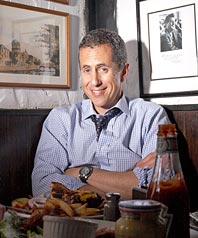
Danny Meyer, a well known restaurateur and author of Setting the Table, has created the “Hospitality Index” predicated on the premise that companies that make their customers, employees and community feel good are the ones that will succeed. It’s not about the “cheapest” product – even in a recession. [Excerpt from Mad Money Interview with Danny Meyer]

A complaint I often hear from commercial district managers and customers is that merchants are lacking in basic hospitality and customer service. Not all merchants (and certainly not the successful ones) need lessons in customer service. But the archetype merchant who has been on a district for decades through changing neighborhood demographics (many times both racial and ethnic) and who can barely disguise the disdain they have for their customers…well, unfortunately I have come across this merchant too many times in my work. These merchants are ready to blame anyone else but themselves for the sorry state of their businesses. As commercial district management professionals, we can usually spot them right away. Their merchandise is usually dusty, business is slow, they have an attitude and they are the first to tell us that we are wasting our time because nothing will change… “these people” don’t want quality or good service, all they want is “cheap”. The only thing you can do is walk away from those individuals and keep them from bringing you down.


As easy as this merchant is to identify, commercial district managers also need to practice hospitality and customer service towards their merchants – and sometimes they don’t do this. In this field, our work is all about relationships. But the challenge is that many district management organizations are hurt by frequent staff turnover, making it hard to build trust with local merchants, property owners and residents over time. That said, building relationships and demonstrating hospitality towards your merchants is THE MOST VALUABLE thing a district manager can do. Every successful initiative is based on merchant engagement. From cooperative marketing, to participation in promotional events, to creating a more appealing shopping environment…successful outcomes are based on merchant engagement. Here are a few things that district managers should be doing a regular basis to build relationships with their merchant community.


1. Participate in local events, particularly when working with an ethnic community. Go to their religious events or special holiday events. Offer to help with expediting street closures for their parades and activities or help them develop better relationships with public officials. Gain their trust by being available and helpful.


2. Walk the street EVERY week (every day if possible) and walk into every store on a regular basis (not just the ones who are receptive towards you). Even if you get attitude, say hi, offer your help, hand out your newsletter and walk out. In one city I was in recently, city officials expressed frustration that in many cases the local district managers didn’t know their local merchants. This has serious ramifications in that city programs such as façade grants and loans never made it out the door. Although these managers spent their time putting on events – they avoided the messy work associated with engaging merchants. The result? The events did little to help merchants grow their retail sales.


3. Be flexible. If you get a last minute request from a merchant or local elected for help – do what you can to accommodate. You never know what kind of good will you are building and how it will come back to you.


If you start with these three activities you can raise your own Hospitality Index Quotient!

Monday, October 12, 2009

Tales from Philly: Small Business Marketing at its Finest

A few weeks ago I had the distinct pleasure of interviewing business owner James McManaman, owner of Absolute Abstract, a ‘frameless’ art store with two locations in Philadelphia, one on 13th Street and the other on East Passyunk Avenue where I was doing some work with the local BID.

James is an excellent businessman who puts into practice all the strategies that we consultants often preach about.

Location, Location, Location
James opened his second store on
East Passyunk after attending an evening social event sponsored by the East Passyunk Business Improvement District (EPBID). It was an eye-opening experience for the entrepreneur, who knew about the neighborhood, but professed to being surprised at the changing neighborhood demographics. With its evening traffic of restaurant-goers, the district was a perfect fit for his inexpensive frameless art. It met the need of potential customers who were wandering the streets in the evening looking for something to do before or after dinner. In a stroke of good luck, he found some space in the district that was ‘retail ready’ – it had been a gallery before going vacant and needed very little, if any tenant improvements. What a coup!

Advertising in the 21st Century
James understands that his that the process of building a clientele is organic. He doesn’t believe in too much advertising, instead choosing to donate art to events in the neighborhood and building good will that generates buzz for his business. He also piggy-backs on EPBID’s evening social events by raffling off art and providing gift bags to participants and truly understands the power of great visual merchandise display. He takes extreme care with his window displays – changing them every three days!


Also critical to James’ success is his email distribution list of 3,000 customers. He makes every possible effort to get every person’s email and is the quintessential provider of customer service. He makes every effort to greet every single customer who walks into the store, telling them first about his strong concept of ‘frameless, affordable, custom-sized’ art. You can’t be in the store for more than ten seconds before hearing these buzz words. As a customer, I was immediately intrigued (anything ‘affordable’ intrigues me these days – and I’m not alone!).

James also created a website where customers can purchase art and provides free consultations. In fact, customers can send a picture of the wall they want ‘designed’ and he will create an assemblage of art to meet the customers needs. What a great concept!

It’s Not Just the Store, It’s the District
James understands that his business is not successful in vacuum. He was instrumental in helping to form a merchants group at his first store in
Midtown Village, and is at it again along East Passyunk. He knows the power of district marketing and is pushing for a map of the district that can be distributed in all stores. He is also committed to helping his next door neighbor (a long standing district merchant) improve their window display. On the day he went to speak with the owner, he found himself standing in the near empty store for 20 minutes before the merchant came to help him. Undeterred, he plans to go back and find a way to help the merchant, while ensuring they are able to ‘save face’ even as they accept his help. This from a man that won’t let customers go ten seconds without being recognized and greeted.

Overall, I say kudos – and what a fantastic addition to this already bustling commercial district!

Tuesday, September 15, 2009

The Merchants Fund – A Friend to Philadelphia Businesses

By John Ungar

John Ungar is Executive Director of the Mount Airy Revitalization Corporation. He has worked as a community development practitioner in Philadelphia for over 12 years.


As commercial district managers and advisors, one of the biggest challenges is getting business owners to make improvements. Skeptical business owners may not see the benefit of making their storefront more attractive. Even if they do, they often lack the desire or ability to make the investment. Often, the only way to make these ideas a reality is to help secure funding for the project. Depending on the neighborhood where your commercial district is located, government resources may be available. However, there are many communities where businesses are not eligible for government funding is not available, but they still need financial help.


The Wadsworth Avenue commercial district, located in the East Mount Airy section of Philadelphia is one such case. Wadsworth Avenue is the main shopping district for this stable middle-class African-American community. The Mount Airy Revitalization Corporation (MARC) manages the commercial district. MARC had completed major public streetscape improvements such as lighting and landscaping, but many of the storefronts still needed upgrades.


The City of Philadelphia offered resources to businesses on designated commercial districts in low to moderate income neighborhoods. However, Wadsworth Avenue businesses were not eligible because of the income level of the surrounding community. Fortunately for Wadsworth Avenue and similar commercial districts, Philadelphia is home to a small foundation dedicated to helping small businesses. The Merchants Fund has played a key role in supporting Wadsworth Avenue businesses where other resources were not available.


Patricia Blakely, Executive Director of The Merchants Fund, understands the needs of small businesses and their important role in our community. “Small business is the backbone of healthy communities and a vibrant local economy. Buy local is not just a catchy marketing phrase; it is about the building blocks of our economy and keeping money flowing.”


MARC directed several businesses to submit grant requests to The Merchants Fund. In just over a year, six businesses on one block received grant awards. In addition, The Merchants Fund awarded MARC a grant to hire a marketing consultant to conduct customer surveys and “mystery shopper” reviews. The project helped merchants engage customers, evaluate the customer experience and improve their customer service. The results of these grants are clearly visible to shoppers.


Most of the businesses used their grants to make major improvements to their storefronts, including Lee's Boutique, shown in before and after images at right. Many business owners were then inspired to invest their own money to complete their projects. Area shoppers have responded positively, and many of these businesses have reported an increase in sales and new customers. By working with businesses one at a time, The Merchants Fund has helped fuel the district’s revitalization. Wadsworth is more vibrant each time we help a store or restaurant owner. “

Wednesday, April 22, 2009

Why Shoppers May Come, But May Not Return, to Your Commercial District


Take a moment to view this short video presentation by Jon Skinner of the Verde Group for the International Council of Shopping Centers on "Retaining Customer Center Shoppers". In it, Jon discusses a shopper survey done in conjunction with the Wharton School of Business of over 1,000 shoppers. While the target audience is shopping center managers, there is quite a bit that commercial district managers can learn by applying similar principles to our work.

So, why do I keep talking about shopping centers when this blog is about commercial districts? Well, because frankly I believe that there is not much of a difference. Our commercial districts are basically open-air (mixed-use) shopping centers - but instead of being owned by a single owner with the power to control and improve the environment, they are owned by many owners who are often working with different objectives and goals. This only making our work more difficult, but essentially, the same.

I really appreciate this video because it identifies some key issues that as to why shoppers don't return to a retail store...this is need to know information during difficult economic times!

Here is what they found:
  • The most significant problem that drives shoppers away are 'sales associate problems', i.e. customer service problems that a shopper may encounter with someone working at the store. Amazingly, 70% of customers who don't return to a store do so because of customer service problems they encounter in a store. And interestingly enough, WOMEN are more bothered by these customer service problems than are men. To make matters worse, over 50% of shoppers will not shop at a store they have never even been to because of a negative comment about the experience that a friend or colleague had at the store. Wow.
Just today I was walking a commercial district with a local BID manager and we passed what looked like a cute hardware store. Just the kind of place folks need and want in the district. The problem is that the owner was basically a nasty person (who happened to own the building - likely with no underlying mortgage). The manager said that in her experience, this was costing the store significant lost sales. Not a surprise given the research. So the next time you walk into a store in your district and customer service is lacking - consider ways in which you can address this most basic of retail problems. And remember to communicate to your retailers that customer service is one of the most significant reasons why shoppers will not return to their store. As a commercial district manager, you should also be thinking about finding ways to encourage or even provide training to employees in customer service. For example, can you bring city or public resources to help support training for a few business owners at once?

  • Another very critical point (and perhaps most important for commercial district revitalization efforts) made by this research is that the shopping center itself plays a significant role in shopper satisfaction. In the case of commercial districts the corollary is what happens on the street. I call this the 'outside-the-store' or 'on-street' experience. This is super critical for commercial districts because at the end of the day, it is the 'outside-the-store' experience that commercial district management entities can control most effectively. Everything from street scape, safety/security, services, events, etc. make a big difference to shopper satisfaction. These outside-the-store experiences are what ultimately set the stage for the in-store sale. The research presented here makes it clear, retailers DO suffer significantly when the district itself is shoddy, unkempt or unsafe. Yet another reason to make sure you always keep on eye on those basic housekeeping details.
I'm excited to hear more about this research as they delve deeper. The next step will look at which specific interventions in the outside-the-store experience, like improvements in safety, aesthetics, etc. pay the most dividends in terms of improving the overall shopping experience, and ultimately driving retail sales. We wait with baited breath - so stay tuned!