Showing posts with label New York City. Show all posts

Friday, September 15, 2017

Saving bodegas, saving third spaces!

Nur Asri is an associate at Larisa Ortiz Associates

This week, two ex-Googlers announced their recent innovation, “BODEGA”, a vending machine, or five-foot-wide pantry box, slated to become the next big convenience stop or amenity in cities across the country. A convenience that is in fact already being provided by already existing bodegas (as they are known here in NYC), or corner stores. These stores, typically run by immigrants, are “frills-free symbols of consumer access and gritty mini-embodiments of the city’s diversity and 24/7 ethos”, and have become more than just a convenient neighborhood retailer. They are ‘third spaces’, extensions of many residents’ homes, and locations where ideas are exchanged and relationships are built. Most importantly, bodegas represent the livelihoods of thousands of immigrants in cities across the country.

Needless to say, “BODEGA” was faced with a great amount of backlash the day it was announced. And we won’t sit quietly either so here’s a quick summary of why “BODEGA” won’t be filling a market gap here, or in most other cities, and will never match up as the amenity that a real bodega is.  
1.       Bodegas are already convenient in most neighborhoods, particularly ones that are not well- served by full-service grocery stores

I did a quick search of NAICS-code defined ‘Food and Beverage stores’ (NAICS: 445) that only had 10 or fewer employees and had annual sales of less than $1 million (Admittedly, these are just some of many characteristics that are presumed to be typical of small family-owned bodegas in New York City but it was the quickest way I could get an estimate of where bodegas or corner stores are already located in a locality) to look at just how convenient they are location-wise.

Estimate location of corner stores and bodegas in North Brooklyn, NY (Source: LOA; ESRI Business Analyst Online)
In North Brooklyn, just by eyeballing, there appears to be at least 1 bodega or corner store every 0.2 mile (mostly! – note the bodega deserts by the Gowanus canal and in Prospect Park). Given that most people are only willing to walk 0.25 mile as part of a commute or to access amenities like parks and public spaces, we can safely say that bodegas here are within the realm of  being convenient and of ‘walking distance’.

Likewise in Lower Manhattan, bodegas and corner stores are everywhere, safe for along the East River but remember, this part of Manhattan is better-served by full-service grocery stores anyway.
Estimate location of corner stores and bodegas in Lower Manhattan and Williamsburg, NY (Source: LOA; ESRI Business Analyst Online)
Operation hours-wise, bodegas are typically open between 16-18 hours per day (if not 24/7), making it accessible to almost everyone returning home at all hours of the day. Furthermore, for some people in NYC, where apartments are shoe-box sized, the lack of a full fridge means that the bodega is also the convenient extended freezer. So you know where you’re going to get that tub of ice cream in the middle of the night when you’re craving a treat.

2.       Bodegas are increasingly offering a wide range of products
A wide selection of fresh fruit at a corner store
in Bedford-Stuyvesant Brooklyn, NY

From non-perishables to fresh produce and beers, the bodega has it! Unlike “BODEGA” that can only carry non-perishable goods (because you know, it’s essentially a vending machine), the bodegas we already have in our neighborhoods can carry almost anything and everything and are therefore more useful to households in the long run. I buy cheese, milk and eggs every other Saturday when I’m finally itching to make an omelet for a leisurely breakfast and I doubt “BODEGA” will ever be able to meet this need. Other residents in Brooklyn today are a little more fortunate and have local bodegas that carry really high quality fresh produce.


3.       Many bodegas are already ‘smart’

Both bodegas that I frequent in my neighborhood have ‘feedback boards’ that enable customers to write the names of products that they wish to see in the store. It’s a simple solution that involves a small cork board, Post-Its and Sharpies, yet owners are able to get more information than “BODEGA” will ever get from its cameras. The cameras in “BODEGA” will apparently track what items are being removed from the machine before sending this data back to main offices to restock the item.

Another thing we need to remember – bodegas also have real people manning the counters, the aisles, the sandwich counters. These people constantly chat with customers to find out if there are any products their customers wanted to see in store. “BODEGA” claims it will have motion sensors to track what products are more popular, and for whom, but I think it’s much easier when I can just express this same information to a person who owns/ manages the store in real-time, don’t you?

4.       Bodegas are hyper locally-sensitive and have personalities

To add on to the earlier argument about the humanness of bodegas, as neighborhoods rapidly change in cities, one block may be extremely different than the next one which also means that bodegas are now stocking almost entirely different products on a block-by-block basis. They are often responding to socio- economic demographics at a block-level and “BODEGA” hasn’t indicated the same capability.

As Adam Chandler wrote in the NYTimes, each bodega is “oddly curated” and no algorithm is clever enough to come up with these eccentricities (at least, not yet). From the Polish specialty foods to Colombian snacks, each bodega has its own specialty treats and delicacies.

5.       Bodegas are third spaces

Franklin Deli Bodega in Greenpoint, Brooklyn NY.
 Photo: Shawn Hoke via Flickr
A relationship with your bodega means you could get a sandwich hook up at an odd hour of the day. More importantly, bodegas are your literal neighbors. They are located below your apartment or next to your building or across from you and are operated by the same people day in and day out. You can chat about the English soccer game happening at the moment, or you can chat about the fact that it’s been a little loud on the street this past weekend, and they’re more than likely to share an opinion about the topic. In one instance, I had a full-blown conversation with the guy at my bodega about how much tastier Pepsi Light was compared to regular Pepsi and the kids in line behind me were more than excited to chime in.

Whether these interactions and relationships are forced or not, they are bound to occur in the small spaces of bodegas, making them vital community spaces for residents in cities across the country.


6.       Bodegas are natural surveillance systems for the neighborhood.

As mentioned earlier, bodegas are open 16-18 hours of the day and in some cases open 24/7, which means bodega employees and customers walking in and out thru late hours of the night serve as ‘eyes on the street’ and round-the-clock surveillance.

7.       Bodegas are employment centers for immigrants

Finally, bodegas are a large employer of immigrants. A Fiscal Policy Institute study published in 2011 found that more than 48% of NYC businesses owners are foreign-born, and in particular, they dominate certain lines of businesses such as dry cleaning, taxi services, and grocery stores (of which bodegas and corner stores make up a reasonable share of this category).

In NYC, retail trade is the broad industry with the largest number of immigrant small business owners. While a full 90 percent of the city’s dry cleaning and taxi service owners are immigrants, a close 84 percent of grocery store owners are also immigrants.

These immigrant business owners already face numerous obstacles in running their businesses, most commonly lack of access to capital (which, apparently “BODEGA” has not been short of) and inability to comply with city business regulations. For now, it seems “BODEGA” will only serve to add problems by becoming a new source of competition for our bodegas, if it does get rolled out in cities like New York, where corner stores and bodegas are already popular.

Like everyone else we'll be paying close attention to where “BODEGA” gets expanded to see if its co-founder, Hunter Walk, keeps his word on “not disrupt[ing] or replace[ing] the urban corner store… the bodega”. 

Tuesday, July 18, 2017

Food Glorious Food

Last week, my dad came into town and I managed to grab dinner with him in the Flatiron District. After dinner, however, my dad was craving cappuccino. But by 8:30pm all of my usual coffee spots were closed and I was at a lost. I did a quick search for something other than Starbucks in the area and chanced upon a Toby's Estate Coffee & Espresso on google maps, around the corner from where we were.

When we got to Toby's, we realized the cafe was part of an even larger retail concept which included an outpost of Strand Bookstore and Club Monaco. I can drink coffee, read a book and buy a dress- the full experience! As retailers continue to modify and adapt their store formats (especially in urban areas) to offer more than just products, food and drinks are fast becoming the go-to formula to introduce a unique experience to customers. By outsourcing these types of services to other businesses, as in the case of Toby's, retailers are also sharing rent burdens.

Last week, Fung Global Retail and Technology wrote a cool article summarizing the different types of food services found in many of London's stores. From cafes to sushi bars in Topshop and Selfridges, I decided to look for the New York equivalents and here are a few popular examples of food experiences in traditional store formats:


In the UK, food service has been shown to play an effective role in encouraging shoppers to “stay longer, spend longer”. Brits who eat during a shopping visit dwell on average 27 minutes longer, and spend 18% more per visit, according to property management firm JLL. In London—where many shoppers are more affluent and the choice of casual dining is countless—stores that offer foodservice can see shoppers dwell only 10% longer, but spend 38% more on average, according to Intelligent Business Systems.

If the same effects were to apply here in the US, retailers searching for ways to drive sales might be well off finding a food and beverage concept that aligns closely with the existing brand and products in-store. 


Thursday, May 11, 2017

A Response to APA17: The dangers of calling it a Modern Food Hall

One of the more popular sessions at the National Planning Conference last week was one titled “Modern Food Halls: Redevelopment Aid or Trend?” The panel discussion was led by Nicolia Robinson of Cooper Carry, an architecture, design and planning firm based in Atlanta, Georgia. Joined by her colleagues Sarah Jane Bonn and Daniel Sweeney, Nicolia led the discussion around one of the most talked-about trends in cities across the country. She opened the floor with a brief presentation on what the drivers of food halls were and attempted to distinguish them from what many of us recognize as food courts and markets.

Food Trends
In 2015, there were only 70 food halls across the nation. Last year, the panel cited that that number had risen quickly to 130, and by the end of 2017, we are expected to see more than 200 food halls across America.

This rapid growth in food halls, like restaurants, can be attributed to the rising trend of eating out amongst consumers. In an earlier post, we wrote about the fundamental and cross-generational shifts that have led to restaurant industry sales surpassing grocery sales for the first time in history. For food halls, the large proportion of millennials eating out more frequently is particularly driving its rapid growth and popularity.

On top of this, the panel claims that food halls are also meeting the needs of consumers who are seeking more “sophisticated and authentic flavors and experiences while dining out”. This has been echoed in recent media reports that claim consumers are “demanding more variety, better quality food while also seeming fatigued with the conventions and time investment of a multi-course, full-service meal” at traditional restaurants.

Defining Modern Food Halls

So what exactly is this food hall we’re all talking about? While the panel from Cooper Carry attempted to distinguish food halls from the traditional food court and market by delineating specific traits for each of these places, the lines began to blurry as they continued to dive deeper into case studies and examples. Before we begin to dissect the discussion around the definition of food halls, here are the characteristics the panelists attached to Food Courts, Markets and the newest hybrid, Food Halls:

Food Court
Market
Food Hall - Marries best of both food court and markets
Mostly national brands
Mostly local brands; mom and pop stalls
Both local and national brands (mostly local)
Fast food to fast casual
Ingredient-focused, produce-heavy stalls
Curated mix of tenants
Convenience

Plenty of gathering space (communal aspect)
Few retail options
Mostly Retail
Balanced retail and food


And here are the different ‘Scales and Types of Food Halls’ that have been observed by the panel:

Micro
Neighborhood
Destination
<10,000sf
10,000-30,000sf
30,000sf
Located in mixed use development, usually in difficult spaces to lease out to other operators


Food Halls
According to the panel, there are some key elements that make a food hall a food hall. First, there is often a heavily curated experience. The trouble with the ‘curated experience’ however has been that it is often targeted toward younger consumers that are more educated and have higher disposable incomes. After all, this is the demographic group choosing to live in urban, dense areas or in transit-oriented neighborhoods where these food halls are often located – key element number two.

Although this was not directly addressed by the panelists, several planners present in the room were rightfully wary of the implications of the food hall’s curated experience. Prices of meals at food halls, as one audience member noted, are often high compared to other available dining options. The noisiness and bustle of food halls also largely appeal to younger adults without children or elderly companions.

Panelists also noted that another key element is the detailed attention often paid to branding food halls as modern amenities and advertising them on social media. This seems troubling as it necessarily excludes certain groups of users from food halls, for example traditional older customers or non- English-speaking customers.

Finally, food halls are supposed to have a variety of authentic tenants. Although this was not clearly explained in the session, I would hazard a guess that this was in reference to locally-owned businesses with new food concepts.

There appear to be a number of problems or inconsistencies with the food hall as defined at the session. In fact, when the floor opened for discussion, many in the audience jumped at the opportunity to ask about the foreseeable economic and social impacts of food halls that was not addressed in the presentation. Issues raised by audience members included insufficient parking and seating space for large crowds, and finally, the elephant in the room – who are food halls for?

In response to crowded spaces, Daniel Sweeney quipped that while seating can be hard to find in these popular food halls, this can in fact be beneficial to vendors. The busyness of the food hall creates a vibrant atmosphere for visitors and makes the food hall appear to thrive.
 
However, when must the line be drawn before the crowds begin to cause discomfort for regular patrons, forcing them to find alternative options and potentially resulting in drop of sales for vendors?

In fact, Chelsea Market here in New York City already suffers this shortfall. As soon as the food hall began to primarily serve tourists and attracted crowds of out-of-towners (over 6 million national and international visitors annually), locals no longer found the shopping environment conducive for daily  needs. Today, many locals intentionally avoid this former neighborhood jaunt. It appears as though food halls run the risk of becoming a visitor attraction rather than a local neighborhood amenity. This very issue raised red flags for me when the panelists started to use Essex Street Market as a case study of a neighborhood food hall.

The Problem with the Food Hall Label


In the past few months, LOA has been working with the New York City Economic Development Corporation (NYCEDC) to create a tenanting and marketing strategy for Essex Street Market as it prepares to relocate to a new facility across Delancey Street. LOA developed a strategic market positioning statement for Essex Market that defined key customer segments before recommending strategies for attracting new tenants and vendors.

Essex Market is, by definition, a public market owned and managed by NYC EDC. It is not a food hall, nor does it aspire to be one. The market is New York City’s oldest public market following Mayor La Guardia’s efforts in the 1930s to clear the city’s streets of pushcarts and build a network of modern indoor public markets. For more than 75 years, Essex Market has been a fixture in Manhattan’s Lower East Side and an important source of affordable products for local shoppers, from Latino and Asian immigrants, to the new millennials who have recently began moving into the neighborhood.

The mission of the market remains to serve the needs of low and moderate income residents in the neighborhood and this can be observed by the mix of tenants at the market. Vendors such as Saxelby Cheese Mongers and Essex Farm Fruits and Vegetable for example accept EBT and offer products at low price points. Even as the market expands in size at its new facility, prepared foods vendors will remain a small percentage of the overall market tenant mix. Ingredients-based purveyors will continue to make up over 70% of the market, including specialty ingredients such as fresh coffee beans, American cheeses and traditional spices.

In addition, NYCEDC and the Essex Market management team, will continue to remain committed to scouting hyper local vendors to fill the remaining spaces at the new facility with preference given to vendor applicants offering farm-related or ingredients-based products. These tenanting strategies are intended to maintain Essex Market’s position as a public market with retail that contributes to the local community’s wellness through fresh, affordable food.

Although the panel had intended on showing the audience a positive example of a publicly-managed neighborhood food hall, they may have taken a leap altogether in labeling Essex Market a food hall. Let’s take a look at the criteria set by the panel for food halls and how Essex Market doesn’t quite meet them:

Food Hall
Essex Market
Both local and national brands (mostly local)
No national brands
Curated mix of tenants
Curated to the extent that EDC is maintaining 70% ingredients-focused, produce-heavy purveyors
Plenty of gathering space (communal aspect)
Yes in the new facility
Balanced retail and food
No - 70% ingredients-based retail

Given that there are already some implications associated with food halls, we need to be careful with the way we use the label. In a previous post on food-based developments, we began to explore some of these negative impacts.

…when food-based developments do not serve the wider community, it stands to run into accusations of causing gentrification and rising property values. In Anaheim, California, where a former fruit packing and distribution center was transformed into a food hall dedicated to local vendors, it has quickly evolved into  a selling feature for new residential developments in the neighborhood. Broookfield Residential for example is hoping to “attract young buyers with units priced between $300,000 and $400,000” in a neighborhood that was once a sleepy town known only for Disneyland. Whether intended or not, the Packing House food hall in Anaheim has led to huge inflow of development into the neighborhood, raising prices of property in the area.

Furthermore, food halls that only serve ready-made meals or chef-made meals are often too upscale for the average customer. While they may help fill gaps in a food desert, prices often prevent lower income bracket groups from accessing these freshly-made and locally-grown foods since most prepared foods are not even eligible for SNAP benefits.”

For all of the benefits food halls claim to have as incubators for small, local businesses and chefs, there are plenty of other players in the industry that are simply abusing the trendy name for profit’s sake. Let's not call it a food hall, if it’s really a market or a food court. 

Wednesday, December 7, 2016

Support Your Local Artists This Holiday Season!

We're all gearing up for the holidays and of course buying gifts has become part and parcel of the season. Although looking for various types of gifts for all the different people in our lives has become less stressful and made easier with department stores and shopping malls offering a wide range of products, artisanal holiday markets have become the new hub to do this same type of cross shopping.


In New York, holiday markets are sprouting up all across the city - indoors and outdoors - and offering customers carefully-curated and unique shopping experiences filled with independent vendors selling an eclectic array of goods. A few weeks back, I stumbled upon Ridgewood Market Holiday Night Bazaar inside a German beer hall in the burgeoning neighborhood. Although the indoor market was discreetly located and inconspicuous, within 45 minutes I was armed with gifts for everyone on my list and not only did I spend much less than I would have at Bloomingdale's, I also got gifts that were handmade and one-of-a-kind.


This community-based artisan market, for example, features over 40 local artists who live or work within the neighborhood and that night all of them were out selling their products in person. There were ceramic pieces carved by hand in a nearby studio, metal jewelry mixed locally, and even honey harvested in local backyards. The truly engaging shopping experience that artists/vendors at such markets are able to offer is also special as many are able to speak eloquently to the process and inspiration of each product being sold.

As more research begins to point to the importance of maintaining physical retail presence and creating compelling shopping experiences to attract millennial shoppers, these holiday markets are certainly doing a great job offering millennials the stories they seek and the opportunities to touch, feel and test products.

Most importantly, this type of local and artisanal market is also fast becoming an outlet for artists, or aspiring small business owners, to test their products on the market and start building a customer base at a particularly crucial time of the year for retail. So for those of you who are still struggling to find the perfect gifts for all the special people in your lives, visit your neighborhood artisanal holiday market in your beer hall, church, or park, and support the local artists and aspiring business owners living amongst you!


Check out amNY and TimeOut New York for their lists of holiday markets in NYC!

Wednesday, December 9, 2015

Five highlights and lessons learned from another successful ICSC Deal Making trade show...

This year's New York ICSC Deal Making just finished, and it was a jam packed two days with lots of great conversations and new relationships forged for both us and our clients.The real work of follow up begins now! I learn something new everytime I attend (nearly seven years and counting!) and this year was no different. So here is my run down of what I took away from the show...

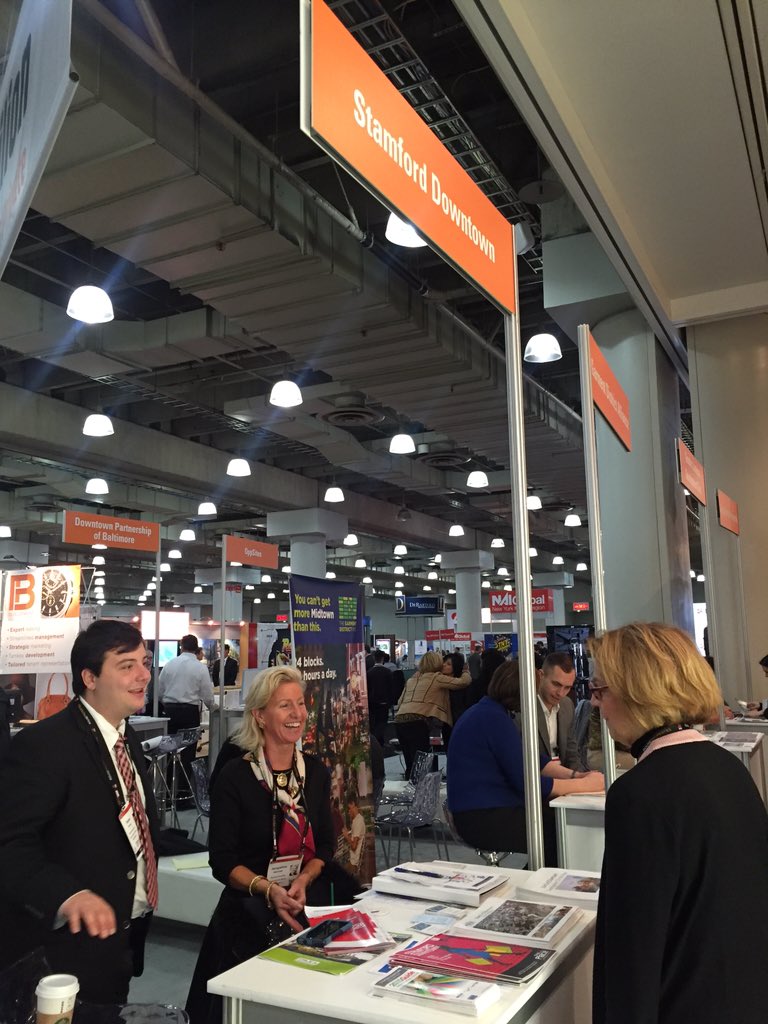
A rebranded P3 Retail Program! As the ICSC Eastern Division Co-Chair for the now rebranded P3 Retail Program (P3 stands for "Public Private Partnerships"), it was a thrill to see the launch in action. The ICSC team, including Cynthia Stewart, Michael Cowden and Jazmen Johnson had videographers ready to go. They had some of their members conduct interviews with ICSC members about their experiences and insight. I'll be very excited to see the final results when it is all done. I was interviewed, and also had the chance to interview Keith Sellars of the Washington D.C. Economic Partnership as well as Mary Reda and Jim Diego of Greater Jamaica Development Corporation. I really enjoyed hearing their insights and learning from their experiences.

Prep work is what it takes to have a great outcome. This year, we we thrilled to work closely on ICSC prep for a large community development corporation here in one of New York's largest outer Borough downtown districts. While the team has been attending ICSC for over five years, they were looking to refocus and refine their efforts and asked us to help. We began by defining their merchandising strategy based on consumer market data and existing business mix. We used this data-driven approach to identify "like districts" that shared similar demographics and retailers. We then combed those districts to identify retailers who were already located in similar markets and with similar co-tenants, but not yet in the district. We also had to make sure that these prospects could be accommodated in available spaces within the district, based an opportunity site list we developed with the client, and that they were the right price points and "lifestyle" fit for the area.  Finally, we did research into whether those prospects were growing in the region. Once we drilled down on prospects that made the final cut, we worked with our client to identify contacts for each - that included who they already knew, who we knew through our industry relationships, and who we could find through our access to the ICSC database and Deal Making attendance list. Once that happened, the client was ready to make calls and set up appointments at the show. 

Getting a booth or kiosk can make a difference. 
This year ICSC made a concerted effort to enlist more non-profit and public municipalities with a discount entry option. I was proud to have been a part of that as Chair of the Municipalities subcommittee that helped plan this part of the show. Our client had never taken a kiosk before and this year they did, and I am happy to say that they raved about the experience. Being able to have a home base, conduct meetings in the shared P3 Pavilion retail space, and chat with drop ins made a real difference for them, and they plan to do it again next year. It is important to note that they made sure to man the booth at all times - and also had staff walking around attending meetings. Another thing to keep in mind is that this strategy needs to be part of a comprehensive approach to the show. Don't think that you can get a booth and people will automatically come to you. The location of the P3 pavilion at the New York show was pretty good. In Vegas however, the Cities of the World pavilion, as it is branded, is in a much more out of the way location. Some cities and non-profit orgs decide to take booths closer to the action, but at greater expense. Everything is a trade off.

On that note I enjoyed my conversation with Keith Sellers of the Washington DC Economic Partnership. They have been attending ICSC for over a decade, and graduated from a shared booth with a utility company to a 5,000+ sf booth in underwritten in part by the local developers. Their approach is so incredibly strategic and thoughtful, and I enjoyed hearing Keith talk about how far they had come.

Embedded image permalink

Social media DURING the show is important. You have to treat your booth or kiosk as a might a retail store. If you don't market it, you are missing opportunities to connect with potential customers. Same goes for a trade show. The good news is that ICSC helps with this. They had a hashtag (#NYnDM) and twitter handle (@ICSC) and would retweet things that were tweeted their way. We made sure to utilize this marketing support and it was a great way to drive traffic to the P3 pavilion and to individual booths.

A marketing brochure may not be the right approach for your district. To support our client's outreach, part of our task included developing new marketing material for them. In the past, their typical marketing strategy was a multi-page brochure with lots of words and tables of data. We knew from our work in the industry that marketing strategies are changing quickly, and that the multi-page brochure, while still making the rounds, can be hard to share digitally and doesn't always come across the same way when viewed on a computer. So we made a suggestion to do something a little different but much more in line with where the industry is going when it comes to marketing retail and site opportunities. Increasingly, developers and brokers are creating marketing decks - basically short slide shows that can be printed and distributed, but are more likely to be viewed  and distributed digitally. They rely less on verbage (that very few read anyway) and more on great info graphics to make a case. They are more straightforward to understand, can be used to tell a story, easier to refine, and easier mix and match on demand. Our client carried these around in bound booklets for reference, and then told the contacts they made that they would forward them the material after the conference. This strategy is a great way to continue contact and an excuse to follow up afterwards - which is the key to success. What I also found was that the decks were a good aide in keeping the presenter on message. And after the pitch, but during the meeting, they were easier to use. You could quickly go back to any slide that communicates the point you want to reinforce.


Overall I was so happy with the outcomes for the ICSC P3 effort as well as for our clients. We live tweeted quite a bit, so follow us @cdavisor if you want to keep up.

Here are some more pics for fun. 
Embedded image permalink
I felt like Oprah interviewing Mary Reda and Jim Diego at the #P3retail booth!
Embedded image permalink
Baltimore Downtown Partnership has a great location. 
Embedded image permalink
Being interviewed by Cindy Stewart of ICSC, together with Jason Claunch of Catalyst Commercial 

Thursday, September 10, 2015

Why should the public/non-profit sectors attend an ICSC Deal Making?

As a planner and consultant with a focus on downtown retail environments, I have always found membership in the International Council of Shopping Centers (ICSC) of incredible value. Over the years I have used the network, training and professional development available through ICSC to gain great insight into how and why shoppers behave the way they do, and these insights have been invaluable to me in understanding how and why some downtown's function well as retail districts, and why others don't.

My understanding of the value of ICSC has only deepened as I have participated as a volunteer leader with ICSC's Alliance Program. The program is an effort to support and enhance public-private partnership, or "P3 Retail" efforts. The need for increased understanding between the public, private and non-profit sectors is indisputable. The retail real estate industry is increasingly looking towards urban sites - and those sites are frequently encumbered or more difficult to assemble. They are also often mired in political challenges, require negotiations, gap financing and incentives, not to mention permitting and approvals that demand public sector understanding of what retail needs to be successful. This is why I am such an advocate for greater public sector engagement in ICSC.

As the New York  Eastern Division Co-Chair for the ICSC Alliance Program, and as Chair of the New York Deal Making Municipalities Sub-Committee, I have been working with an amazing group of ICSC colleagues to develop more robust programming for public and non-profit sector industry professionals, beginning with the ICSC New York National Deal Making forum in December 2015. See below for a short clip on why Deal Making is what one participant calls "a prerequisite for anybody who is doing business in the retail real estate arena." I couldn't agree more with that statement.


I will also be posting information about upcoming ICSC educational webinars for public/non-profit sector professionals so please be sure to check back for more info. (Psst...if you sign up for our free newsletter on this page, you'll get a quarterly update on all things related to downtown retail in your inbox!).

Thanks all - we'll keep you posted as events get scheduled!

- Larisa

Friday, May 1, 2015

Commercial District News Round Up

Your 'One New York' Cheat Sheet
Last week, New York City Mayor Bill DeBlasio released 'One New York' which is a plan to "preserve and enhance New York City’s role as a leading global city."  If you don't have the time to read this 332 page behemoth, this link gives you the quick run down.  What we personally found very exciting was the consideration given to the role that neighborhood business districts play in the health of the city and the quality of life of local residents.
Photo credit: Demetrius Freeman
Companies Trade Suburbs for City Life
Trend watch: a reversal from decades of company exodus to the suburbs, some companies are now looking at urban downtowns as the next frontier to growing their companies, as well as attracting and retaining a younger workforce that is renting more and drawn to more walkable communities. Expedia plans to move to downtown Seattle and likewise Motorola Mobility plans to head downtown Chicago.
Image source: Wall Street Journal | Image credit: Expedia
Asheville Just 'Happened' to Develop a Nice Downtown - Or Did It?
A long and slow process to rebuild downtown Asheville has produced great results, taking community involvement and optimism.  Its downtown was once barren in the 60's and 70's after the effects of a one-two punch - a highway through downtown and Asheville Mall. Check out the before and after pictures and process recounted by a long-term local.
Photo credit: Romantic Asheville
Heart of the Community program selects six new cities to receive placemaking grants
Non-profit organizations in six U.S. cities will receive Placemaking grants from Southwest Airlines to assist in renewing "underutilized public spaces."  The cities and spaces are:
  • Albuquerque, New Mexico: Civic Plaza
  • Ft. Myers, Florida: Lee County Regional Library
  • Jacksonville, Florida: Hemming Park
  • Milwaukee, Wisconsin: 4th & Wisconsin Area
  • Portland, Maine: Congress Square Park
  • St. Louis, Missouri: Strauss Park 

Image source: archinect.com/
Urban Blight Isn't Just Bad To Look At, It's Bad For Your Health
Not an extensive study but points to connection between urban blight and health, of note heart rate. Heart monitors were strapped to volunteers and monitored when they were in blighted areas versus greener open areas. The study coordinator is confident this study will lead to a larger study.