Showing posts with label innovative practices. Show all posts

Wednesday, August 2, 2017

Parking Lots to Public Spaces

Nur is an associate at Larisa Ortiz Associates

In recent months we've talked a lot about parking issues downtown - whether to keep your lots and garages, how to keep and maintain them, whether to lower parking minimums. I assure you our rants about parking lots and garages are well-founded. If you need to be reminded, there are about 500 million parking spaces throughout the country occupying about 3,590 square miles, as last reported in 2012. Furthermore, in some cities in the U.S., parking lots cover more than 30 percent of the local land area, according to Eran Ben-Joseph, a professor of urban planning at M.I.T. who wrote "ReThinking A Lot." Often, these parking lots downtown are owned and/ or managed by municipalities which means they are in fact public land that should be enjoyed by the public.

Pike Place MarketFront (After)
Many cities have become privy to this fact and are increasingly taking a more human-centric approach toward parking spaces and lots and are turning them into the rightful public spaces that they should be. Many of these strategies often start with smaller, guerrilla tactics such as weekly farmers markets in parking lots, or seasonal cultural events, before getting buy-in from local communities to structurally transform the lots into public plazas/ squares, and even light manufacturing spaces (as in the case of Seattle’s latest Pike Place MarketFront). Architects have also increasingly been introducing green design to parking lots for decades now to improve the pedestrian environment downtown. They are incorporating more flora and fauna, and natural permeable paving materials that mitigate storm water runoff and urban heat island effects common in downtowns with high density.

Parklets are another common strategy being employed in major cities to reclaim parking spots for conversion into public spaces. This strategy, while helpful in building support among local businesses and residents to lower parking supply in downtowns, only manages to typically reclaim one or two parking spaces for a limited amount of time. When we start to think bigger, we are able to convert entire parking lots into larger public spaces such as public plazas and parks and we would be reclaiming on average 50-100 parking spaces in one fell swoop.

Here are some examples of parking lots in downtown areas that have been strategically transformed into public spaces. Each case shows that there are incredible social and economic benefits to be reaped from reclaiming parking spaces.

Fort Worth, TX– Sundance Square [Completed in 2013]

Sundance Square (Before - 2007) PC: GoogleMaps
Sundance Square (After - 2016) PC: GoogleMaps
Sundance Square now occupies land that once was home to two separate parking lots (each with more than 60 spaces) across from each other along Main Street in downtown Fort Worth. The Plaza now offers residents, workers and visitors a large space for events, programs and individual use. Public workshops were facilitated by PPS throughout the planning process. "Through the open discussions, it became clear that people mostly thought of downtown Fort Worth as an area to pass through, but not a destination in itself..." and there was no gathering space sufficient enough for large downtown events, which the community felt was important. The community also felt that "the neighborhood could use more places for food and other necessities" so this was addressed by activating the edges of the plaza with more ground floor commercial establishments. The restaurants on the ground floor also feature outdoor seating fronting the plaza and encourage active surveillance of the public space. In addition, the plaza also features water fountains that are interactive and fitting for the warm climate in Texas. 


Montreal, Canada – Joseph Venne Public Plaza [Completed in 2014]
Joseph Venne Public Plaza (Before) PC: GoogleMaps
The Joseph Venne Public Plaza is much smaller in size compared with Sundance Square. It only measures about 10,000 SF and was formerly the site of a parking lot with 20+ spaces. The parking lot's transformation was part of a larger neighborhood revitalization project in the Sainte-Marie neighborhood.

Joseph Venne Public Plaza (After) PC: Steve Montpetit
The site is located adjacent to historic buildings including the JTI-Macdonald Corp building, a well-known tobacco factory and also the CSDM, a French boarding school that was once used as a primary school for tobacco factory workers. The plaza therefore serves to connect the two historic buildings while providing an inviting space for students, workers and residents in the vicinity to gather outdoors in the warmer months. The space was also designed to be ecologically sustainable and today serves as a natural retreat for locals with its greenery, water fountain and wooden benches. 


Pike Place MarketFront (After) PC: GoogleMaps
Seattle, WA – Pike Place MarketFront [Completed in 2017]
Most recently, Pike Place Marketfront has been unveiled as the latest parking lot transformation. Measuring about 39,500 SF, the site was formerly a parking lot with structural remnants of the Municipal Market building. The site now not only features a 30,000 SF public plaza with views of the Puget Sound and Mount Rainier, but it's also the site of new vendor spaces and low-income senior housing. The project was led by the City of Seattle and the Pike Place Market Preservation and Development Authority and also engaged in a community planning process. 

Pacific Plaza Park (After)

Dallas, TX – Pacific Plaza Park [In Progress]
Finally, still in progress, is the Pacific Plaza Park in downtown Dallas. In March this year, Dallas City Council approved a development agreement to build the Pacific Plaza Park. The public space has been made possible through a partnership between the City of Dallas Park and Recreation Department, the Trust for Public Land and local non-profit Parks for Downtown Dallas. The park will site on the former site of a parking lot in downtown Dallas and will become the city's newest destination, bringing benefits to workers downtown seeking outdoor places to enjoy lunch, and also to nearby businesses by bringing in greater foot traffic.
Pacific Plaza Park (Before)

Thursday, January 5, 2017

The Food Hall Revolution


The retail industry has seen its fair share of trends and advancements this past year – ecommerce is up and millennials are driving experiential shopping. However, one that has inescapably stood out has been the development of food hubs and food halls all across the country. In fact, earlier in 2016, UrbanLand predicted that food was to be the ‘anchor of retail developments’ based on the rising proportion of store growth being attributed to restaurants. From Detroit to Irvine, cities and developers are catching onto the culinary-oriented developments in their own unique ways but are these places simply sexier, marketable versions of the traditional food courts? Let’s find out what constitutes food hubs and food halls and what impacts they are having on economic revitalization and food access.

Marketplaces have been a key economic, cultural, and social component of villages, towns, and cities for thousands of years and food, particularly fresh produce, has always been a vital commodity for trading at these markets. A food hub, as defined by the National Food Hub Collaboration and Michigan State University, is a “business or organization that actively manages the aggregation, distribution, and marketing of source- identified food products primarily from local and regional producers”. By doing so, food hubs bridge the gap between food producers and consumers and satisfy wholesale, retail, and institutional demand all under one roof much like traditional marketplaces. Today, many fresh food producers lack the capacity and financial resources to access these markets on their own so food hubs are indeed making it possible for these producers to gain entry into new markets, increase their incomes, and up scale production.

Not only are food hubs profitable to producers, distributors and retailers, they are also vital in improving neighborhood access to local foods by offering complementary programs and resources such as shared community kitchens for healthy cooking classes and food incubators for budding restaurateurs. All of these components that make up a food hub differentiate it from farmers markets that simply provide platforms for producers to sell directly to consumers like you, but what about the difference between food hubs and food halls?  

As it turns out, the term ‘food halls’ is increasingly being used interchangeably with food hubs. However, food halls are more often than not one of the many programs within a food hub (complementary to grocery stores, food education facilities, food distribution centers, and kitchen incubators). When food halls function separately and independently, they are often less community- and agriculturally-based. While they may claim to support locally-owned businesses and chefs, they often do not guarantee as tight a policy of local produce-sourcing as food hubs do given their varying administrative organizations and missions. Often, these food halls simply bring together multiple vendors, carefully curated to meet the targeted consumers’ taste and preference, and provide them space in high traffic areas at potentially lower rental rates.

Regardless of semantics, both food halls and food hubs are cooking up destinations for local food and providing opportunities for local businesses to grow – albeit to different degrees. Given the infancy of these food-based developments, we can only begin to predict their position as catalysts for redevelopment and socio-economic revitalization.

The Eastern Market in Detroit, Michigan, for example, demonstrates the potential for food hubs to be really sustainable and efficient food sources for communities. The food hub is the “largest historic public market in the Unites States” and has been connecting small farms with customers from metro Detroit for over a century. It has done more than just organize farmers markets for locals; the Eastern Market also hosts a massive wholesale market for local restaurants and grocers from midnight to 6am on weekdays. In addition, the market has incubator spaces for food entrepreneurs and provides professional kitchens for entrepreneurs who would otherwise be unable to access such resources. At Eastern Market, entrepreneurs can develop and test-market their products before expanding regionally. Take for example, McClure's Pickles. The firm got its start at the market and has since expanded nationally.

The Eastern Market not only meets the scope of a regional food hub but has certainly met its mission to “build facilities and critical infrastructure that fortifies the food sector as a pillar of regional economic growth while improving access to healthy and affordable food choices in Detroit”. A survey conducted by Michigan State University found that the majority of food hubs in Michigan helped increase access to healthy foods in underserved neighborhoods, thereby supporting a healthier population. More than 95 percent of Michigan's food hubs are experiencing an increase in demand of their products and services with restaurants, small grocery stores, and kindergarten through 12th-grade school food services being their number one customers. Furthermore, among the food hubs surveyed, about half of food hubs were equipped to accept federal Supplemental Nutrition Assistance Program (SNAP) benefits.

Food hubs also have the potential to act as arts and cultural centers for their neighborhoods. The large halls and spaces located in the hubs are conducive to art and design festivals. Eastern Market, for example, is home to the Detroit Design Festival every fall and many other creative pop-up events and programs. Like other food hubs, it is increasingly becoming a mixed-use building and yet food-based hub. Even food halls that simply feature chef-driven vendors and tenants are becoming arts and culture centers hosting a myriad of events throughout the year. In a time where millennial customers seek out unique retail experiences, the merging of the arts and culinary worlds was only an inevitable next step.

On the other side of the coin, when food-based developments do not serve the wider community, however, it stands to run into accusations of causing gentrification and rising property values. In Anaheim, California, where a former fruit packing and distribution center was transformed into a food hall dedicated to local vendors, it has quickly evolved into  a selling feature for new residential developments in the neighborhood. Broookfield Residential for example is hoping to “attract young buyers with units priced between $300,000 and $400,000” in a neighborhood that was once a sleepy town known only for Disneyland. Whether intended or not, the Packing House food hall in Anaheim has led to huge inflow of development into the neighborhood, raising prices of property in the area.
Furthermore, food halls that only serve ready-made meals or chef-made meals are often too upscale for the average customer. While they may help fill gaps in a food desert, prices often prevent lower income bracket groups from accessing these freshly-made and locally-grown foods since most prepared foods are not even eligible for SNAP benefits. So while food hubs and food halls may have a right to celebrate their contributions to the local food system and local communities, there are a few implications to also be wary of.

If that didn’t scare you enough, there are also a set of complex challenges involved in setting up and running food-based developments. Start-up, administrative and operational costs can run up high, especially when run by a nonprofit. Although finding capital through donations, grants, and city funding is a common strategy, these funding sources can easily go away. The many moving parts of food hubs also means that overhead costs can arise at all points on the operational chain.
Further still, site development has proven to be a huge challenge for food hubs. This is due to requirements for cold storage, space for processing food, distribution, and strategic marketing. The non-profit Boston Public Food Market, for example, is already spending close to $14 million to turn a state-owned building into a market.

Indeed, food hubs and food halls can take several years to achieve financial profitability. However, it is food hubs that work with various partners, including local farmers’ associations and school districts, which are able to increase their earnings easily by establishing distribution agreements.  These partners often also help with advertising and marketing efforts – lowering food hub overhead – and provide food hubs with a consistent yet diverse customer base.
On the other hand, food halls that function separately and independently with only chef-driven vendors open with 100 percent occupancy before quickly running into problems of high operation and marketing costs. This often leads to high lease rates for vendors. Since local entrepreneurs are particularly susceptible to rent charges and often are unable to make their businesses work in the long run without continued support from the food hall, these food-based developments hollow out and struggle to find replacement chefs.

As we move into a new year, and the trend of food hubs and food halls catches on rapidly across cities, let’s watch out for the saturation point in food-based developments. More importantly, let’s beware of its real impacts on food access and our local neighborhoods and communities. 

Thursday, October 27, 2016

New York City Department of Small Business Services issues Commercial District Needs Assessments

We are thrilled to share the release of the City of New York's Commercial District Needs Assessments (CDNA's). These six neighborhood assessments set a tremendously high bar for the kind of information that government entities can collect and share on behalf of local communities. The assessments give neighborhoods a powerful tool that they can use to encourage investment and advocate for the improvements they want and need. They allow neighborhoods to communicate not only strengths, but also make clear the kinds of enhancements that are needed to improve quality of life and business opportunities for both residents and businesses alike.

Our connection to this project is quite personal. Over a year ago, the New York office of the Local Initiative Support Corporation provided funding for our firm, Larisa Ortiz Associates, to develop the framework for what eventually became the CDNA approach. In coming months we will be working with LISC  to turn the methodology in a practical 'how to' manual so that other communities can benefit from - and perhaps even replicate - the approach.

Our philosophy has always been that communities - particularly underserved urban communities - cannot and should not be understood by market data alone. The syndicated data that is available is often inaccurate. So when retailers or investors use it to understand urban markets they are often misled to believe there is limited opportunity for new business. To combat that perception we have developed an approach, honed over many years, that considers four key areas of inquiry as follows:

  • Business environment - in particular locations of high retail density, as well as the quality and type of retail offerings
  • Physical environment - including the conditions of the public realm (i.e. streets, sidewalks, and public spaces) and the private realm (buildings, and privately owned assets) as well as the degree to which the corridor is easily accessible the the resident and non-resident customer base
  • Market and demographic data - not just for residents, but also for non-residents, including employees and visitors to the community who may alter the customer profile
  • Adminstrative capacity - which reflects the organizations, institutions and local leaders whose engagement is critical to the success of commercial revitlaizaiton efforts. 
This approach results in a much more comprehensive profile of opportunities and needs - and helps put communities behind the steering wheel when it comes to advocating for the investments that they want and need. We couldn't be more excited to share this with the field. Congrats to the amazing team at SBS for the hard work that went into creating these wonderful tools!

To download the assessments and to find out more about the great work that the Department of Small Business Services is doing click here

Tuesday, August 23, 2016

EMERGING IDEAS IN COMMUNITY TOURISM PLANNING

This is the final in a three-part series exploring ways communities are playing a greater role in planning and developing their tourism industries. Guest blogger Joe Bly is a former documentary producer and writer, going beyond film and television to tell stories of social and urban progress.

Platforms like Airbnb that facilitate short term rental (STR) can make any property owner a proprietor in their local tourism industry.  City governments across the country are responding largely with regulations and restrictions on private, short term rentals. 

Is there a municipality doing the opposite – embracing, supporting, or even helping coordinate short term rental as part of economic and tourism development or community tourism planning?

I know a couple that lives in Cambridge, MA, just across the river from Boston.  But they are not there right now.  They are driving in a minivan with their four, yes four, children under the age of ten, and they’ve been travelling all summer.  They can take the time because they are both public school teachers, off for the summer.  But they can’t go home – they rented it out by days and weeks for the entire summer on Airbnb.

Each year they pack away their household to move out and convert their home into a rental.  Their freewheeling, vagabond season is half vacation, half job.  The longer they can stay out of their home, the more money they can salt away in savings.  It’s not about a greater vision of building community-based lodging capacity in Cambridge, nor upending chain hotels; just the gumption of one family to pay for their four, yes four, children to go to college.

The vast majority of hosts on Airbnb, VRBO, or any of the sites that facilitate short-term rental are doing so as individuals, trying to turn extra rooming space into income.  This is why there has been such a groundswell, seen all over the world – 640,000 Airbnb hosts in 57,000 cities - precisely because its driven by individual entrepreneurism. 

But there are collateral benefits of STR, beyond the individual host.  Airbnb has recently been making great strides in public relations to research and publish figures articulating in several ways the local economic benefit that Airbnb facilitates.  Their findings claim that Airbnb generates hundreds of millions of dollars in rental and tourism spending in major cities, Airbnb guests stay longer on average than hotel guests, and therefore end up spending more money locally.  Additionally, and most interestingly, Airbnb brings guests and spending to neighborhoods off the beaten path that normally don’t benefit from tourism.

That sounds great!  Town planners everywhere must be leaping to figure out how to support this boon.  Cambridge Office of Tourism must be trying to figure out how to coordinate with my friends?  Well, much more independent research will be needed to verify the accuracy of Airbnb’s calculations, as well as to understand the impact on the entire lodging and tourism sector.  And it gets more complicated from there – certain Airbnb activity bumps up against existing commercial regulation and town codes.

So the STR PR effort has gone into industry wide advocacy.  In 2013, Airbnb, HomeAway, and TripAdvisor together set up and funded their own advocacy group, The Short Term Rental Advocacy Center.  Their mission seems to be to promote favorable research and publicity like above, and also to stay abreast of the avalanche of state laws and municipal codes that are being altered every day as each town and jurisdiction reacts to the surge in short term rental trends.

The Short Term Rental Advocacy Center Website


The STRAC website and any stroll through the public minutes of town planning meetings reveals that most locales are scrambling to beef up regulations and restrictions to private and short term rental in an attempt to stave off the most rampant abuses of unregulated commerce and the worst side effects of pocking neighborhoods with crash-pads and party houses.  Therefore, STRAC will also trumpet legislative victories, and examples of city and court decisions that protect owners’ rights.  I asked STRAC is they knew of any towns that were somehow incorporating Airbnb activity into their economic development strategies.  A spokesperson, pointed me to Galveston, TX one of their favorite STR-friendly cities.  Why?  The official tourism website lets you search vacation rentals and one of the only city regulations is that hosts must provide a card to guests about noise ordinances.

Hands off, yes, but more laissez faire than coordinated.

There is another model, the closest thing I could find to local government facilitating Airbnb activity and doing so in a way that can direct some of the benefit towards shared community resources. 

Ithaca, NY

In June of this year, Tompkins County, home to the town of Ithaca and Cornell University, became the first in the state to strike a very interesting arrangement with Airbnb – the collection and payment of the local room tax.  Tompkins county has for many years required the estimated 170 Airbnb hosts to pay a 3% occupancy tax on the rental fee, the same as hotels and bed and breakfasts.  However, this created a huge compliance headache.  Individuals, far more often than businesses, were not aware of the requirements or how to charge the fee, and even less equipped to calculate their personal tax implications and how much they owed the county.  Then it fell on the county government to try to collect owed taxes from residents.  In the new deal, Airbnb will automatically add the tax to any rental in Tompkins County, and will be responsible for remitting it directly to the County. 
‎Tompkins County Planning Department, Tourism Program Director Tom Knight, emphasizes that the agreement was in essence about solving a compliance issue in a way that now guarantees 100% payment.  A 2014 report estimated that Airbnb rentals in the county that year amounted to perhaps 1 million dollars in revenue –possibly representing approximately $30,000 in room tax.  A majority of the total occupancy taxes will continue to be put towards promoting tourism to the region and investing in tourism infrastructure.  Knipe is careful to point out that the program is new and will need to be studied to assess if more coordination with Airbnb or its hosts will become part of the long range strategic plan. http://www.ithaca.com/news/county-get-airbnb-to-pay-percent-room-tax/article_15ebf396-38a4-11e6-afea-63e5811cd9d7.html

Downtown Ithaca

Related Tompkins County tourism statistics:
-          Over 900,000 visitors annually, one of the highest in upstate New York
-          Over $2 million per year collected in occupancy taxes and invested in tourism
-          Estimated 10,000 annual room nights through Airbnb
-          Airbnb room tax represents roughly 1 – 1.5% to that budget
-          More cities upstate are looking into similar arrangements

Are Tompkins County’s 10,000 Airbnb room nights actually adding net tourists, or siphoning 10,000 nights from the local hotels and BnBs?  That’s the subject of another blog.  What’s interesting to this series’ theme of community tourism planning is the role that Airbnb and similar platforms could play. 

Already there is the power to bring more residents into participatory roles in their tourism industry.  They become more involved.  And they are easily connected.  We describe the peer-to-peer structures in terms like “members” and “communities”.  Particularly for locales with little lodging industry, Airbnb could be an essential part of tapping existing lodging capacity that is closer to the community and can be utilized quickly and with little investment. With input from the community, city codes supportive of STR could be updated.

Tourist attractions and events could coordinate with Airbnb hosts – for example, if there were an upcoming festival, promotion efforts could be shared with Airbnb hosts, so that they are abreast of every opportunity and can adapt their own marketing.

Airbnb guests as a community could coordinate with the business community so that information on local restaurants, retail, and attractions could be provided to Airbnb guests the way that is standard at hotels and motels.

Airbnb can cooperate in a tax programs similar to that in Tompkins County
The Tompkins County model serves as a starting point for town and tourism planners, especially cities of lesser means, to regulate yes, but also coordinate with and harness that energy and revenue in ways that involve more of the community in the planning, and create more shared benefit.


Tuesday, July 19, 2016

Emerging Ideas in Community Tourism Planning

This is the first in a three-part series exploring ways communities are playing a greater role in planning and developing their tourism industries. Guest blogger Joe Bly is a former documentary producer and writer, going beyond film and television to tell stories of social and urban progress.
Community Tourism Planning in Hood River, Oregon, has benefited downtown through increased economic activity
As we are arriving at a tourism or vacation travel destination, what often goes by in a blur, at first, is the community that surrounds it.  Other times, unique neighborhoods themselves are the destination, and we’re alert to every nuance.
In either case, we eventually leave with lasting impressions, whether we realize it or not, that are rooted in the relationship between the attraction and the supporting community.  Did we feel welcomed as visitors?  Were the residents and the area benefitting broadly from tourism, or was all the business captured by a single attraction?  Did we feel exploited by a “tourist trap”, or did we go unnoticed, our getaway about being able to pretend for a little while that we lived there ourselves?  How do we feel about tourists in our own town?
Increasingly, attention is being paid to the relationship between the community and its tourism industry.  Community Tourism Planning is a planning approach that recognizes the contributions of the host community:

  • Local residents are the owners, operators, and workers of the tourism base.
  • Communities are the source of the culture or character that attracts visitors, the “flavor”.
  • More than ever, residents are literally the hosts, using Airbnb or other means of private short term rental to physically host visitors in their own homes.


Therefore, Community Tourism Planning, or Community Tourism Development, encourages greater input and determination from a community in the strategic planning of local and regional tourism, in order to:
  • Ensure that tourism plans are aligned with overall community values and goals. 
  • Create a collaborative partnership between residents, businesses, resources, and planning authorities.
  • Work with communities to balance the positive and negative effects of tourism
  • Ensure that the whole community is the ultimate beneficiary of sustainable tourism activity.

Municipal governments, visitors bureaus, and tourism development groups find that communities involved in planning remain active participants and are also supportive of initiatives, regulations, or changes to policy needed to pursue the collective mission.  As tourism becomes more diverse in its offerings, spread out geographically, and democratized by attractions and visitors interacting on social media, community tourism planning will be a way for planning authorities to continue to provide leadership and coordinate their goals.
The University of Minnesota Extension has created a community tourism development project that publishes resource material articulating guidance particularly well.
In many ways, the process is similar to other kinds of cultural or business development assessment and planning.  The quality of community engagement is the key factor to success.

Inventory – The Community Identifies its Tourism Assets

Hood River Fruit Loop Map
The Hood River Valley of Oregon has long been a center of apple, pear, and cherry farming.  It is also situated in the scenic Columbia River Gorge.  When the area’s agribusiness base began to fade in the 1990s, communities focused on what they felt were their two most valuable assets:  local food products and scenic environs.  From this inventory, Hood River County growers associations and state development grants created a wildly successful agritourism zone known as The Fruit Loop.  The Fruit Loop is now a 35 mile road route guiding visitors to farms, farm stands, and wineries of the Columbia River Gorge.  The Hood River Chamber of Commerce Visitor Council publishes maps and coordinates a calendar of events to bring tourists to harvest and blossom festivals year-round.  In 2014, approximately 125,000 visitors spent almost $88 million dollars in this rural county.  The Fruit Loop has become a model for inclusive and sustainable food tourism because its development is anchored in what the community believes it does best (http://hoodriverfruitloop.com/)
Mt. View's Fruit Stand, open each harvest season from July through November, is the not-so-hidden treasure of the Hood River County Fruit Loop 

Participants - Harness Community Initiative and Identity

Washington D.C.’s Neighborhood Heritage Trails are official walking tours of the District’s historic neighborhoods, illuminated with historical markers, signs, photographs, and audio tour guides.  Cultural Tourism DC is the nonprofit group that coordinates the funding and technical assistance to implement the tour routes – but the historic themes, research, and planning are articulated and conducted by the neighborhoods themselves.  Prospective communities submit proposals for routes and points of interest.  If selected by Cultural Tourism DC’s committee, they receive funding to organize and conduct their own historical research and receive guidance in assessing and developing the neighborhood’s capacity to support a permanent tour offering (transportation, available public restrooms, businesses on the route are informed and can answer questions).  Enticing visitors to explore, eat, and shop “beyond the monuments”, the tours become economic boons to neighborhoods further away from D.C.’s most iconic landmarks.  But the benefits also go beyond financial.  Supporting communities in their own heritage tourism development stimulates a conversation, taps the knowledge and memory of life-long residents, and fosters a sense of neighborhood identity.  The program now boasts 17 distinct heritage trails on historic themes from art history to civil rights (http://www.culturaltourismdc.org/portal/neighborhood-heritage-trails).

Knowledge partner case studies of developing neighborhood cultural tourism include:
Future posts in this series will take a closer look at issues related to community tourism planning. 
Community Based Tourism:  CBT is a tourism development model that relies entirely on the host residents and resources where little or no tourism infrastructure or authority exists.  At the moment, this kind of thinking is applied to very poor or isolated communities possessing a unique attraction, like a village in Tanzania that hosts wildlife tours.  Couldn’t these same principles be applied to any locale here in the U.S. with a natural or cultural attraction, but few resources to develop them?
Airbnb as economic development plan:  Platforms that facilitate short term rental make any property owner a participant in their local tourism industry.  Municipal governments across the country are responding largely with regulations and restrictions on private short term rentals.  Is there a municipality doing the opposite – embracing, supporting, or even helping coordinate short term rental as part of economic and tourism development?
These and other stories from where the rubber meets the road, or the comfortable street shoe meets the walking tour. 
joe bly

Wednesday, December 9, 2015

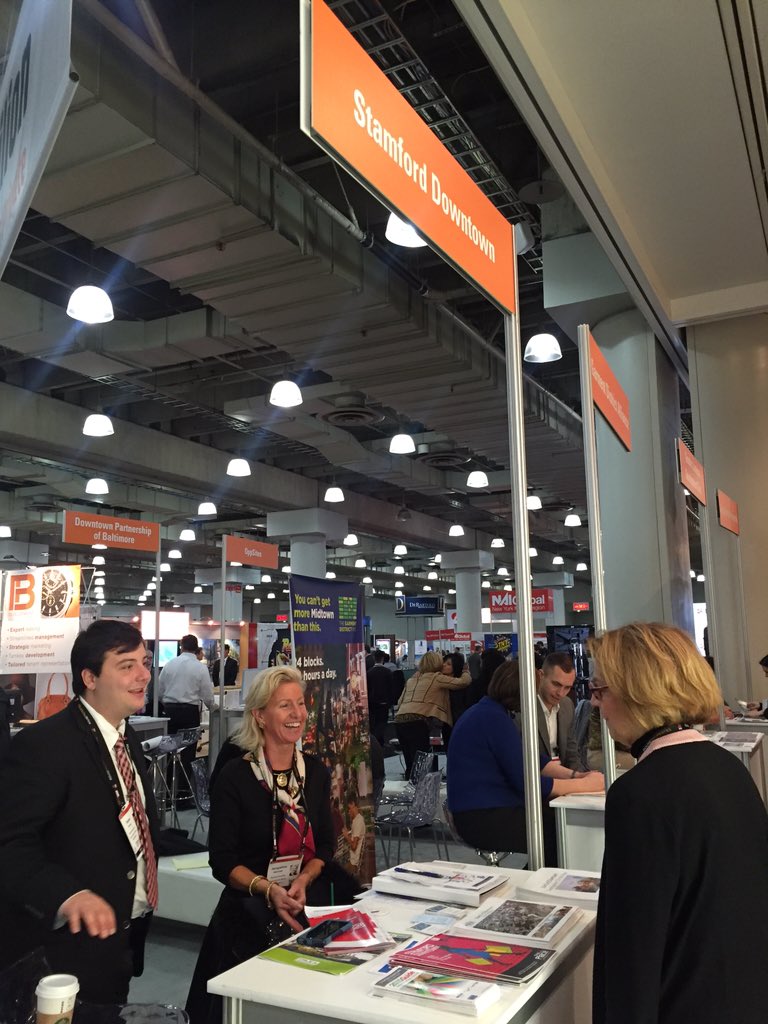
Five highlights and lessons learned from another successful ICSC Deal Making trade show...

This year's New York ICSC Deal Making just finished, and it was a jam packed two days with lots of great conversations and new relationships forged for both us and our clients.The real work of follow up begins now! I learn something new everytime I attend (nearly seven years and counting!) and this year was no different. So here is my run down of what I took away from the show...

A rebranded P3 Retail Program! As the ICSC Eastern Division Co-Chair for the now rebranded P3 Retail Program (P3 stands for "Public Private Partnerships"), it was a thrill to see the launch in action. The ICSC team, including Cynthia Stewart, Michael Cowden and Jazmen Johnson had videographers ready to go. They had some of their members conduct interviews with ICSC members about their experiences and insight. I'll be very excited to see the final results when it is all done. I was interviewed, and also had the chance to interview Keith Sellars of the Washington D.C. Economic Partnership as well as Mary Reda and Jim Diego of Greater Jamaica Development Corporation. I really enjoyed hearing their insights and learning from their experiences.

Prep work is what it takes to have a great outcome. This year, we we thrilled to work closely on ICSC prep for a large community development corporation here in one of New York's largest outer Borough downtown districts. While the team has been attending ICSC for over five years, they were looking to refocus and refine their efforts and asked us to help. We began by defining their merchandising strategy based on consumer market data and existing business mix. We used this data-driven approach to identify "like districts" that shared similar demographics and retailers. We then combed those districts to identify retailers who were already located in similar markets and with similar co-tenants, but not yet in the district. We also had to make sure that these prospects could be accommodated in available spaces within the district, based an opportunity site list we developed with the client, and that they were the right price points and "lifestyle" fit for the area.  Finally, we did research into whether those prospects were growing in the region. Once we drilled down on prospects that made the final cut, we worked with our client to identify contacts for each - that included who they already knew, who we knew through our industry relationships, and who we could find through our access to the ICSC database and Deal Making attendance list. Once that happened, the client was ready to make calls and set up appointments at the show. 

Getting a booth or kiosk can make a difference. 
This year ICSC made a concerted effort to enlist more non-profit and public municipalities with a discount entry option. I was proud to have been a part of that as Chair of the Municipalities subcommittee that helped plan this part of the show. Our client had never taken a kiosk before and this year they did, and I am happy to say that they raved about the experience. Being able to have a home base, conduct meetings in the shared P3 Pavilion retail space, and chat with drop ins made a real difference for them, and they plan to do it again next year. It is important to note that they made sure to man the booth at all times - and also had staff walking around attending meetings. Another thing to keep in mind is that this strategy needs to be part of a comprehensive approach to the show. Don't think that you can get a booth and people will automatically come to you. The location of the P3 pavilion at the New York show was pretty good. In Vegas however, the Cities of the World pavilion, as it is branded, is in a much more out of the way location. Some cities and non-profit orgs decide to take booths closer to the action, but at greater expense. Everything is a trade off.

On that note I enjoyed my conversation with Keith Sellers of the Washington DC Economic Partnership. They have been attending ICSC for over a decade, and graduated from a shared booth with a utility company to a 5,000+ sf booth in underwritten in part by the local developers. Their approach is so incredibly strategic and thoughtful, and I enjoyed hearing Keith talk about how far they had come.

Embedded image permalink

Social media DURING the show is important. You have to treat your booth or kiosk as a might a retail store. If you don't market it, you are missing opportunities to connect with potential customers. Same goes for a trade show. The good news is that ICSC helps with this. They had a hashtag (#NYnDM) and twitter handle (@ICSC) and would retweet things that were tweeted their way. We made sure to utilize this marketing support and it was a great way to drive traffic to the P3 pavilion and to individual booths.

A marketing brochure may not be the right approach for your district. To support our client's outreach, part of our task included developing new marketing material for them. In the past, their typical marketing strategy was a multi-page brochure with lots of words and tables of data. We knew from our work in the industry that marketing strategies are changing quickly, and that the multi-page brochure, while still making the rounds, can be hard to share digitally and doesn't always come across the same way when viewed on a computer. So we made a suggestion to do something a little different but much more in line with where the industry is going when it comes to marketing retail and site opportunities. Increasingly, developers and brokers are creating marketing decks - basically short slide shows that can be printed and distributed, but are more likely to be viewed  and distributed digitally. They rely less on verbage (that very few read anyway) and more on great info graphics to make a case. They are more straightforward to understand, can be used to tell a story, easier to refine, and easier mix and match on demand. Our client carried these around in bound booklets for reference, and then told the contacts they made that they would forward them the material after the conference. This strategy is a great way to continue contact and an excuse to follow up afterwards - which is the key to success. What I also found was that the decks were a good aide in keeping the presenter on message. And after the pitch, but during the meeting, they were easier to use. You could quickly go back to any slide that communicates the point you want to reinforce.


Overall I was so happy with the outcomes for the ICSC P3 effort as well as for our clients. We live tweeted quite a bit, so follow us @cdavisor if you want to keep up.

Here are some more pics for fun. 
Embedded image permalink
I felt like Oprah interviewing Mary Reda and Jim Diego at the #P3retail booth!
Embedded image permalink
Baltimore Downtown Partnership has a great location. 
Embedded image permalink
Being interviewed by Cindy Stewart of ICSC, together with Jason Claunch of Catalyst Commercial 

Wednesday, May 27, 2015

The Downtown Project and Zappos CEO Tony Hsieh lean on entrepreneurs to make old Las Vegas a go-to destination

A trip to ICSC Dealmaking is an annual rite of passage for many of us who work in the retail environment - and this year was no different. Usually the trip involves lots of walking in a variety of air conditioned environments, so I was pleasantly surprised when an old friend and former BID Director - who now works for a large mall developer - suggested we visit Downtown Las Vegas for lunch. I was thrilled to accept the invitation, especially after he reached out to Resort Gaming Group, the development company that executes the revitalization effort. They served up John Curran for a fantastic tour (thank you John!).  We were also joined by David Downey, Executive Director of the IDA (and whose Board I sit on). With cab fare in hand, the three of us flagged a taxi to take us the two miles from the convention center to the old downtown.

For those who don't know, Downtown Vegas is the home of Zappo's CEO Tony Hsieh's efforts to create an entirely new kind of "office park".  Instead of a staid office park surrounding by not much (which is how you might describe Zappo's previous home in a suburban area outside Las Vegas), Hsieh flipped the script and took over the old Las Vegas City Hall after the City left, bringing in nearly 2,000 employees to the area. Not only  that, but he also backed an effort, known as "The Downtown Project" with $350 million of his own dollars. What has been done so far is still in its nascent stages, but the outcomes are many. The difference with this effort and other downtown revitalization efforts with which I am familiar is that it is less focused on physical improvements. Instead, the effort is starting with entrepreneurs - they have sought out multiple business owners with the passion, energy and creative drive to make a go of something interesting and unique. The three efforts that I was most impressed with were Container Park (a shopping/civic center for start up bus, the Market (a small specialty grocery store) and the Oasis, a hip motel that cashes in on the Las Vegas retro vibe. See pics below. For more on Hsieh's efforts and the Downtown Project, check out this Freakonomics Podcast ("Could the next Brooklyn be Las Vegas?"). Well worth the listen.

 Container Park: One of the more interesting efforts is the Container Park - a block of small business spaces located in custom made shipping containers.
The entrance to the Container Park - a shopping/civic/entertainment
space that aims to offer budding entrepreneurs a place to test their business concepts. 

The interior of the block includes a great play space for kids

More kids...

Shipping containers = spaces for small businesses
Restaurants have also set up shop
The Market, a small grocery store to serve a growing population: To make up for a lack of a grocery store (and still too little residential or employee demand to support a traditional grocery store) RGG helped establish one themselves.


Local residents no longer have to travel far for the basics. The Market is a Downtown Project
supported effort that provides an important amenity for a growing residential population. 
The Market is heavy on prepared foods for the busy Zappo's employee

The Oasis, a retro boutique motel (formerly a Travel Inn Motel) was completed rehabbed by the Downtown Project and now serves as a cool spot for visitors. 

The Oasis at Gold Spike offers high class, but low priced, accommodations. 
The swimming pool is a welcome reprieve from the Las Vegas sun. 

Tuesday, November 25, 2014

Holiday Best Practices and Innovations for BIDs

After Halloween things really start heating up for Business Improvement Districts as the weather really starts cooling down.  Consumers are expected to turn out in large numbers, as usual, this holiday season to make it a successful shopping period.  To help these shoppers, BIDs can go above and beyond the typical lights and banners to make the shopping experience all that much more memorable and enjoyable. 

Commercial District Advisor has composed a list of best practices, or innovations as well, that BIDs can enact this holiday season in late November and December that will give every shopper, whether the family looking to have a memorable experience or the last minute shopper with just a few minutes on their hand.

Valet Parking
Valet parking could provide shoppers, whom might be seeking the convenience or time saving, with the convenience of getting straight to the shopping, dining, or entertainment without the hassle of finding parking at this busy time of year. The Springfield Business Improvement District will be providing a “Park with Ease” valet parking initiative this Thanksgiving weekend in two locations to assist shoppers painlessly to and from their destination. http://www.masslive.com/news/index.ssf/2014/11/springfield_business_improveme_1.html

image via steinwaystreet.org
Santa: Not Just at the Mall Anymore
Even though BIDs don’t have an indoor plaza to host a Santa Claus a la indoor malls, they can still find an available space such as a current vacancy or safe open plaza in their BID to host a Santa Claus to draw in those that would want the iconic and memorable experience with Santa. Steinway BID in Queens, NY did just that in 2013. http://steinwaystreet.org/category/news/


Santa Gift Giveaway
Gift giveaways can attract a large crowd of enthusiastic patrons.  The Fordham BID in the Bronx is hosting their 10th annual holiday event with Santa, free gifts for the first 600 kids, free raffles, music and activities. This event also kicks off a 2½ week 10% discounted shopping program starting Dec. 5 with 60 stores participating. Further, Fordham BID has tied the event into their broader digital marketing program with a phone app and a mystery gift registration through Eventbrite. http://www.fordhamroadbid.org/


Pa-Rum-Pa-Pum-Pum, Not Ba-Hum-Bug
image via Atlantic Ave BID Facebook
Carolers can provide that heartwarming seasonal entertainment that shoppers are looking for.  In addition, a group of singers like an elementary school or local church children’s choir can pull parents and family to the BID for support.  Atlantic Avenue BID in Brooklyn performed in 2013 in the Boerum Hill neighborhood and in the past many local Harlem churches caroled in the 125th Street BID in Manhattan. Other BIDs can take Madison Downtown BID’s lead with Saturday seasonal entertainment: http://www.visitdowntownmadison.com/events/index.php?category_id=2801


Special Holiday Transportation
image via visitdowntownmadison.com
Maneuvering the streets quickly to get that “I gotta have it” toy or just sharing a memorable experience with others can be a meaningful thing for holiday shoppers.  They can complete both or either by riding a special seasonal transportation such as a decorated bus or trolley around the district or corridor.  This especially comes in handy with unsafe or inconvenient sidewalks such as ice, snow, or bad weather.  Madison, WI Central BID provides a Downtown Holiday Shopping Trolley for its shoppers: http://www.visitdowntownmadison.com/events/index.php?category_id=2801

Coat Drive or Coat Give Away
Often times coat donation bins in cities are dilapidated or possibly untrustworthy, so it is nice to connect holiday shoppers with the idea of giving back by offering and promoting a coat drop off bin or coat drive within the BID like the Granville
image via Granville BID
 BID.  And in the giving spirit, Southern Blvd BID in the Bronx is distributing new children's coats in the Hunts Point section of the Bronx on December 17th. Yonkers Downtown BID mixed giving with pleasure by offering an event that combined a coat drive with a mixer, "Collective for a Cause."  
http://www.granvillebusiness.org/coat-drive-for-the-woodlands/
https://yonkersdowntown.com/event/2nd-annual-coat-drive-mixer/