Showing posts with label Urban Commercial Districts. Show all posts

Friday, September 15, 2017

Saving bodegas, saving third spaces!

Nur Asri is an associate at Larisa Ortiz Associates

This week, two ex-Googlers announced their recent innovation, “BODEGA”, a vending machine, or five-foot-wide pantry box, slated to become the next big convenience stop or amenity in cities across the country. A convenience that is in fact already being provided by already existing bodegas (as they are known here in NYC), or corner stores. These stores, typically run by immigrants, are “frills-free symbols of consumer access and gritty mini-embodiments of the city’s diversity and 24/7 ethos”, and have become more than just a convenient neighborhood retailer. They are ‘third spaces’, extensions of many residents’ homes, and locations where ideas are exchanged and relationships are built. Most importantly, bodegas represent the livelihoods of thousands of immigrants in cities across the country.

Needless to say, “BODEGA” was faced with a great amount of backlash the day it was announced. And we won’t sit quietly either so here’s a quick summary of why “BODEGA” won’t be filling a market gap here, or in most other cities, and will never match up as the amenity that a real bodega is.  
1.       Bodegas are already convenient in most neighborhoods, particularly ones that are not well- served by full-service grocery stores

I did a quick search of NAICS-code defined ‘Food and Beverage stores’ (NAICS: 445) that only had 10 or fewer employees and had annual sales of less than $1 million (Admittedly, these are just some of many characteristics that are presumed to be typical of small family-owned bodegas in New York City but it was the quickest way I could get an estimate of where bodegas or corner stores are already located in a locality) to look at just how convenient they are location-wise.

Estimate location of corner stores and bodegas in North Brooklyn, NY (Source: LOA; ESRI Business Analyst Online)
In North Brooklyn, just by eyeballing, there appears to be at least 1 bodega or corner store every 0.2 mile (mostly! – note the bodega deserts by the Gowanus canal and in Prospect Park). Given that most people are only willing to walk 0.25 mile as part of a commute or to access amenities like parks and public spaces, we can safely say that bodegas here are within the realm of  being convenient and of ‘walking distance’.

Likewise in Lower Manhattan, bodegas and corner stores are everywhere, safe for along the East River but remember, this part of Manhattan is better-served by full-service grocery stores anyway.
Estimate location of corner stores and bodegas in Lower Manhattan and Williamsburg, NY (Source: LOA; ESRI Business Analyst Online)
Operation hours-wise, bodegas are typically open between 16-18 hours per day (if not 24/7), making it accessible to almost everyone returning home at all hours of the day. Furthermore, for some people in NYC, where apartments are shoe-box sized, the lack of a full fridge means that the bodega is also the convenient extended freezer. So you know where you’re going to get that tub of ice cream in the middle of the night when you’re craving a treat.

2.       Bodegas are increasingly offering a wide range of products
A wide selection of fresh fruit at a corner store
in Bedford-Stuyvesant Brooklyn, NY

From non-perishables to fresh produce and beers, the bodega has it! Unlike “BODEGA” that can only carry non-perishable goods (because you know, it’s essentially a vending machine), the bodegas we already have in our neighborhoods can carry almost anything and everything and are therefore more useful to households in the long run. I buy cheese, milk and eggs every other Saturday when I’m finally itching to make an omelet for a leisurely breakfast and I doubt “BODEGA” will ever be able to meet this need. Other residents in Brooklyn today are a little more fortunate and have local bodegas that carry really high quality fresh produce.


3.       Many bodegas are already ‘smart’

Both bodegas that I frequent in my neighborhood have ‘feedback boards’ that enable customers to write the names of products that they wish to see in the store. It’s a simple solution that involves a small cork board, Post-Its and Sharpies, yet owners are able to get more information than “BODEGA” will ever get from its cameras. The cameras in “BODEGA” will apparently track what items are being removed from the machine before sending this data back to main offices to restock the item.

Another thing we need to remember – bodegas also have real people manning the counters, the aisles, the sandwich counters. These people constantly chat with customers to find out if there are any products their customers wanted to see in store. “BODEGA” claims it will have motion sensors to track what products are more popular, and for whom, but I think it’s much easier when I can just express this same information to a person who owns/ manages the store in real-time, don’t you?

4.       Bodegas are hyper locally-sensitive and have personalities

To add on to the earlier argument about the humanness of bodegas, as neighborhoods rapidly change in cities, one block may be extremely different than the next one which also means that bodegas are now stocking almost entirely different products on a block-by-block basis. They are often responding to socio- economic demographics at a block-level and “BODEGA” hasn’t indicated the same capability.

As Adam Chandler wrote in the NYTimes, each bodega is “oddly curated” and no algorithm is clever enough to come up with these eccentricities (at least, not yet). From the Polish specialty foods to Colombian snacks, each bodega has its own specialty treats and delicacies.

5.       Bodegas are third spaces

Franklin Deli Bodega in Greenpoint, Brooklyn NY.
 Photo: Shawn Hoke via Flickr
A relationship with your bodega means you could get a sandwich hook up at an odd hour of the day. More importantly, bodegas are your literal neighbors. They are located below your apartment or next to your building or across from you and are operated by the same people day in and day out. You can chat about the English soccer game happening at the moment, or you can chat about the fact that it’s been a little loud on the street this past weekend, and they’re more than likely to share an opinion about the topic. In one instance, I had a full-blown conversation with the guy at my bodega about how much tastier Pepsi Light was compared to regular Pepsi and the kids in line behind me were more than excited to chime in.

Whether these interactions and relationships are forced or not, they are bound to occur in the small spaces of bodegas, making them vital community spaces for residents in cities across the country.


6.       Bodegas are natural surveillance systems for the neighborhood.

As mentioned earlier, bodegas are open 16-18 hours of the day and in some cases open 24/7, which means bodega employees and customers walking in and out thru late hours of the night serve as ‘eyes on the street’ and round-the-clock surveillance.

7.       Bodegas are employment centers for immigrants

Finally, bodegas are a large employer of immigrants. A Fiscal Policy Institute study published in 2011 found that more than 48% of NYC businesses owners are foreign-born, and in particular, they dominate certain lines of businesses such as dry cleaning, taxi services, and grocery stores (of which bodegas and corner stores make up a reasonable share of this category).

In NYC, retail trade is the broad industry with the largest number of immigrant small business owners. While a full 90 percent of the city’s dry cleaning and taxi service owners are immigrants, a close 84 percent of grocery store owners are also immigrants.

These immigrant business owners already face numerous obstacles in running their businesses, most commonly lack of access to capital (which, apparently “BODEGA” has not been short of) and inability to comply with city business regulations. For now, it seems “BODEGA” will only serve to add problems by becoming a new source of competition for our bodegas, if it does get rolled out in cities like New York, where corner stores and bodegas are already popular.

Like everyone else we'll be paying close attention to where “BODEGA” gets expanded to see if its co-founder, Hunter Walk, keeps his word on “not disrupt[ing] or replace[ing] the urban corner store… the bodega”. 

Friday, September 1, 2017

Strengthening Your Downtown Night Time Economy

Nur is an associate at Larisa Ortiz Associates

Lower East Side is a popular night-life hub in NYC

Night time economies are typically characterized by business done between the hours of 6pm and 6am. This includes a large range of economic activity taking place in food and drinking places, entertainment centers like cinemas, theaters, comedy clubs, sports and recreation facilities, and even retail stores. While these are typically labelled core night time economies, there are additional non-core night time economy sectors that you might less likely be aware of including transportation, health care and infrastructure. Around the world, many downtowns and cities are seeing an overall growth of businesses operating at night and are therefore taking proactive measures to strengthen those economic sectors that help promote the sustainability of the area.


The importance of sustaining your night-time economy

Opponents of the concept however, including residents and business owners alike, have negative perceptions of the crime and disorder that night time economies are supposed to bring. Many fear alcohol-fueled violence on the streets and heightened underage drinking offences, and as a result, higher spending on policing, emergency services and law enforcement. These potential problems of crime and violence, however, have increasingly been shown through research to be easily overcome by numerous other benefits brought by night time economies, including increased employment opportunities, increased footfall and sales for businesses from extended business hours, extended overnight visitor stays, and ironically, even improved crime and safety. In fact,a report found that a more diverse night time crowd in Belfast City not only impacted footfall but crime & anti-social behavior and perceptions statistics.
London, UK shows it has a strong Night Time Economy.

In the UK, night time economies has been estimated to value up to 27% of total town and city center turnover and between 5-10% of overall employment figures. In London, the nation's most populous city, that figure is even more impactful with 1 in 8 people employed in the night time economy. Night time footfall across a number of city centers in the UK has also been found to have outperformed figures captured during the day.

Meanwhile in Australia, a similar contribution was reported by night time economies to job creation and revenue. Between 2009 and 2013, night time economy sales increased by 20% from $90 billion to $108 billion, even higher than the broader Australian economy growth of 14% in the same period. In addition, the night time economy in Australia employs over 1 million people nationwide.

Other studies have also found that night time economies increase the vibrancy of cities through increased access to businesses, services and entertainment for residents and visitors, and promotes and markets local cultural venues that are typically only open in the day and inaccessible to most of the working population. For smaller downtowns and cities, night time economies can go so far as attracting and retaining the younger Millennial population seeking nightlife options in their place of residence, and this might even prevent a brain drain in the local workforce.

Strategies to boost the night time economy

London's Night Czar Amy Lame and Mayor Sadiq Khan
These measurable impacts of the night time economy in various parts of the world have since led more cities to take on a more comprehensive outlook on managing the night time economy, including establishing offices or commissions of the downtown night life. Many cities in Europe have taken this on including London, whose Mayor formed the Night Time Commission and appointed Amy Lamé as the city's "Night Czar". Last month,  New York City Council passed a bill allowing Mayor de Blasio to appoint a Director of Nightlife to oversee a newly-established Office of Nightlife. Regardless of title, the role of such an office and/or leader is to effectively bring together various stakeholders in the night time economy before planning and implementing a suite of strategies that will tie together all of a city's retail, cultural, entertainment attractions. In a way, these Night Mayors are really the downtown's "place managers". Their greatest task of course is to convene all of the unsung night time heroes who work to keep downtown alive and safe at night, from business owners, waiters and bartenders to security staff, police and sanitation workers. Every voice needs to be heard in the planning conversations in order to ensure the night time economy is sustainable.

Some strategies that Offices of Night Life across the world have implemented to boost the night time economy include: 

  1. Coordinating extended retail and cultural institution opening hours - whether annually, bimonthly, or weekly. 
  2. Implementing quality urban design features along nightlife corridors - lighting, CCTV cameras, ground floor transparency
  3. Maintaining a robust night-time program that converges with business hours - light festivals, outdoor music performance, cultural events
  4. Conducting a liquor law review to ensure appropriate businesses are able to serve drinks late at night
  5. Creating a new or building upon an existing cultural quarter to serve as a new hub of night life
These strategies, however, must be supported by a slew of other more complex actions that are critical to ensuring a safe, viable and sustainable night time economy. Sanitation procedures must be managed and well-coordinated in order to protect the amenity of local residents and businesses without disrupting the flow of night time festivities. Garbage pick-up times, for example, may need to be revised on nights where businesses are open late and a light festival is expected to take place with over a thousand participants roaming the streets.

Public transit authorities and local cab companies also need to be in close coordination with entertainment venues and bars to ensure that late night revelers are able to travel safely before and after spending time downtown. In addition, police authorities and public safety partners must be aware of business hours and night time programs and be prepared to delegate personnel to core areas of night time economies. 

Late night business operation licenses must also be carefully granted to businesses that can demonstrate appropriate safety measures, including the ability to disperse patrons quickly and quietly when the premises closes so as not to have an adverse impact on neighbors. If the downtown does not currently allow mobile food trucks to operate in the night, it may be a good idea to extend the licenses and permits to allow for such businesses to operate late into the night so as to ensure a diverse offering of food and drinking places for patrons. 

How to know if your night time economy is successful?
Sydney produces an area profile sheet annually
to track the progress and impacts of its late-night
management stategies

London and many other cities around the world that have adopted comprehensive strategies to boost their night time economies have also begun to measure the impacts of their actions. For them, the success of a night time economy not only depends on the ability to attract a diverse range of people to a variety of activities at night, but also the ability to increase sales and tourism receipts downtown.

The easiest ways to measure these are of course total sales figures, employment statistics, visitor rates, and pedestrian counts (comparing night time figures to daytime figures, or year-on-year changes). Town centers in the UK have also taken a step further to measure qualitative impacts of their night time management plans by surveying customers and making social observations of the types of street activity and behaviors that take place during the night.

After all, monitoring and managing the process of your downtown's night time plan and strategies is a critical step in the process to ensuring long-term success of your downtown night time economy.

Thursday, October 27, 2016

New York City Department of Small Business Services issues Commercial District Needs Assessments

We are thrilled to share the release of the City of New York's Commercial District Needs Assessments (CDNA's). These six neighborhood assessments set a tremendously high bar for the kind of information that government entities can collect and share on behalf of local communities. The assessments give neighborhoods a powerful tool that they can use to encourage investment and advocate for the improvements they want and need. They allow neighborhoods to communicate not only strengths, but also make clear the kinds of enhancements that are needed to improve quality of life and business opportunities for both residents and businesses alike.

Our connection to this project is quite personal. Over a year ago, the New York office of the Local Initiative Support Corporation provided funding for our firm, Larisa Ortiz Associates, to develop the framework for what eventually became the CDNA approach. In coming months we will be working with LISC  to turn the methodology in a practical 'how to' manual so that other communities can benefit from - and perhaps even replicate - the approach.

Our philosophy has always been that communities - particularly underserved urban communities - cannot and should not be understood by market data alone. The syndicated data that is available is often inaccurate. So when retailers or investors use it to understand urban markets they are often misled to believe there is limited opportunity for new business. To combat that perception we have developed an approach, honed over many years, that considers four key areas of inquiry as follows:

  • Business environment - in particular locations of high retail density, as well as the quality and type of retail offerings
  • Physical environment - including the conditions of the public realm (i.e. streets, sidewalks, and public spaces) and the private realm (buildings, and privately owned assets) as well as the degree to which the corridor is easily accessible the the resident and non-resident customer base
  • Market and demographic data - not just for residents, but also for non-residents, including employees and visitors to the community who may alter the customer profile
  • Adminstrative capacity - which reflects the organizations, institutions and local leaders whose engagement is critical to the success of commercial revitlaizaiton efforts. 
This approach results in a much more comprehensive profile of opportunities and needs - and helps put communities behind the steering wheel when it comes to advocating for the investments that they want and need. We couldn't be more excited to share this with the field. Congrats to the amazing team at SBS for the hard work that went into creating these wonderful tools!

To download the assessments and to find out more about the great work that the Department of Small Business Services is doing click here. 

Wednesday, June 15, 2016

Round Up: "Innovation Districts," The Housing Trilemma, Philly Revamps Corridors, Walkable Urbanism Ranked, Chicago Rakes in Another Corp HQ

Newest Fad in Urban Development: Innovation Districts

You can call something a duck but does that make it a duck? Despite the use of farm animals to draw out this point, does calling a district an "Innovation District" guarantee its future as such. A new trend in urban development is encasing areas with this name. 


In the wake of housing affordability rising across the nation but the desire to live in both a city with a strong economy and high quality of life, Josh Lehner at the Oregon Office of Economic Analysis explored the “housing tri-lemma” and discovered three US cities that achieve all three.


In Philadelphia, new energy, direction, and leadership abounds for their commercial corridors that have been neglected over time. Philadelphia has multiple district initiatives such as the Storefront Improvement Program, The Business Security Camera Program, and The Instore Forgivable Loan. Find out more...


The article claims that walkable urban places command a rent premium, increase equity—and are poised for more growth. The story presents data and charts displaying levels of Walkable Urbanism.


The companies are following the labor force which wants to be where the action is. McDonald’s is moving its HQ from sprawling leafy suburban Oak Brook to an area close to the city’s most violent neighborhoods - "joining a parade of companies creating an island of prosperity amid urban dysfunction."


Thursday, December 10, 2015

What have we learned from the urban big box parking boondoggles of the past?


I realize that two examples don't suggest a trend, but these two examples of underutilized urban parking lots suggest a real problem - that hopefully we are on a path to overcome - in the world of urban retail.

In Columbia Heights, DC, the 1,000 space parking lot adjacent to DC USA, whose anchors include Target and Bed Bath & Beyond, remained empty enough upon opening in 2008 that "the operator typically blocks off one of its two sprawling levels" ["At Columbia Heights Mall, So Much Parking, So Little Needed", Washington Post, 10/09]. The $40 million dollar parking lot was financed with public monies. In 2010, the developer, likely with approval from their tenants, started renting spaces out for daily and monthly use.

Fortunately, we have come a long way since the days when suburban style big box retailers were squeamish about urban locations that violated their parking requirements. At the time that both of these projects were conceived, there were very few examples of big box stores in urban setting, so offering parking was a way for the public sector to mitigate the perceived risk of an untested product for retailers. But the truth is we can't put all the blame on the retailer or developer. It wasn't just the retailers who wanted parking. In many communities development stokes fear that shoppers will troll the neighborhood for parking, creating a residential parking shortage. To make matters worse, antiquated zoning based on suburban parking requirements sometimes require far more parking than might be truly necessary.

In New York, there was a similar situation with East River Plaza ["East River Plaza Parking Still Really, Really Empty, New Research Shows", Streetsblog NYC, 4/12]. The mall, like DC USA, is anchored by Target, as well as Manhattan's first Costco, and opened for business in 2010. According to the New York Times, the parking garage cost $62.4 million to build.

I did a quick analysis of parking ratios for both sites and found that they both come in, on average 2.10 spots per 1,000 SF of retail.


For those familiar with parking ratios, 2 spaces per 1,000 SF of retail might sound insufficient. These days, major suburban shopping centers offer 4 or more parking spaces per 1,000 SF of retail. But to be fair, it is light years from where we have come.  In 1954, the American Society of Planning Officials, the predecessor to today's American Planning Association (APA) published a report on "Site Design, Parking and Zoning for Shopping Centers" that looked at parking ratios for 49 of the nations shopping centers and on average, the parking ratio was 9.2/1,000 sf.

So while we are still learning about what makes sense in urban areas, what we can say is that transit rich communities like Columbia Heights and East Harlem can support retail with much less parking than they currently have. And the public sector could have gotten away with contributing much less in public funds to underutilized parking. Of course, hind sight is 20/20 and we may not have known that at the time, but it's certainly helpful to know for the future.

Thursday, November 5, 2015

Six basic principles for building thriving commercial districts in low-income communities

Our most recent projects have taken us to Bridgeport and Trenton, two former industrial powerhouses, both now struggling with the impact of industrial displacement, poverty and population decline. Yet there remain residents in these communities for whom improvements are critical to life outcomes. And in our opinion, we really don’t have much time to waste. As Nathaniel Hendren, Harvard Economist and founder of The Equality of Opportunity Project was quoted in a recent New York Times piece, “where you grow up matters.” So simply put - and so true. His research has shown that for “every extra year a child spends in a better environment – as measured by the outcomes of children already living in that area” improvements to childhood outcomes can be demonstrated.

In our work we have found that addressing the corridor challenges of the lowest income communities means thinking more creatively about how to address anemic market conditions. So for practitioners working in these challenging and complicated environments, we share a few principles that we have come to deploy in our work....

1. Support the creation of community retail nodes – rather than dispersed retail. Businesses thrive in clusters, and the convenience of being able to patronize a few businesses at once will enhance the appeal of the district as a whole - benefiting all businesses by driving more traffic than each might on their own. 


This existing node of retail may not look like much,
but it serves the local community and is located at a well trafficked intersection. A district like this is in a better position to benefit from improvements than an area that is less visible and off the beaten path. 

2. Visibility, accessibility and convenience. Retail needs a good location to work. You can’t fabricate these fundamental market conditions if they don’t exist, so don’t try to create a district somewhere where the fundamentals aren’t in place. In some places, whether we like it or not, this means a place that can be easily accessed by car (with adequate parking). In other places, this means access to public transit, or an easy, direct walk by foot or bike. If you ignore this principle you are just setting yourself up for failure. So make sure you are working on retail concentrated in places that are accessible and receive plenty of visibility. Think busy intersections rather than sleepy side streets (even if those side streets once contained vibrant retail in days of yore). 

And sometimes minor, seemingly inconsequential barriers to access will hurt sales. Making your customers walk any further than they have to can result in them hopping right into their cars to find a parking spot somewhere where they won't have to walk. Sad but true. 

Great parking on one side. A great jazz club restaurant on the other. In between? A canal.
So all those folks leaving work in the evening are ten times less likely to do anything but jump in their car and go elsewhere. 


3. Consider businesses that do not depend as heavily on discretionary income, because if you don’t have enough residents with discretionary income right now, it might be awhile before you have enough to support new businesses. So instead think about uses that can be sustained through public funding or other income streams, such as publicly funded day care centers, urgent care clinics, non-profit service providers, educational or workforce training programs, etc. These kinds of businesses not only fill space, but they also generate traffic can result in the added benefit of creating enough demand to support a small amount of auxiliary businesses, from food related businesses – a pizza shop or deli – to a pharmacy or convenience store.

Increasingly urgent care facilities are taking over ground floor retail space.
These facilities can provide an extra level of medical service in communities that desperately need them. 
4. Build density – sometimes there is no way around it. In some communities, population figures are so anemic that the only adequate response is to build housing. This is where Community Development Corporations have excelled over the past few decades, using important financing tools like the Low Income Housing Tax Credit or Section 202. While these resources are unfortunately increasingly limited, they have proved critical in turning neighobrhoods around and in creating the market demand over time that can support small businesses.  

A vacant lot of Southern Boulevard in the South Bronx

The same vacant lot after local CDC WHEDCO developed the project into quality affordable housing.
5. Focus on the physical environment – focus on improvements to the physical environment that will address issues of safety. Think about graffiti clean up, street clean ups, vacant lot clean ups – these kinds of activities can help build neighborhood pride and in fact do have an impact on neighborhoods. Research funded by LISC, one of the nation's largest community development intermediaries, found that the impact of Philadelphia's vacant lot program had a positive impact on the sales of local businesses, real estate values in the district and shopper preference. A win-win all around. 

New Kensington CDC in Philadelphia was one of the early adopters of the vacant lot maintenance program, now called Philadelphia LandCare. At some point these lots may be developed, removing the "missing teeth" from the district. But for now the maintained lots have made a significant improvement along the corridor. 

6. Focus on helping small businesses address public safety and visibility issues. Sometimes small investments in physical improvements, such as lighting or signage, can help existing businesses capture more market share. Moreover, these small investments can make a big difference in the perception of public safety. A transparent window, or well positioned lighting, can make a store that most didn't think twice about visiting more appealing. 

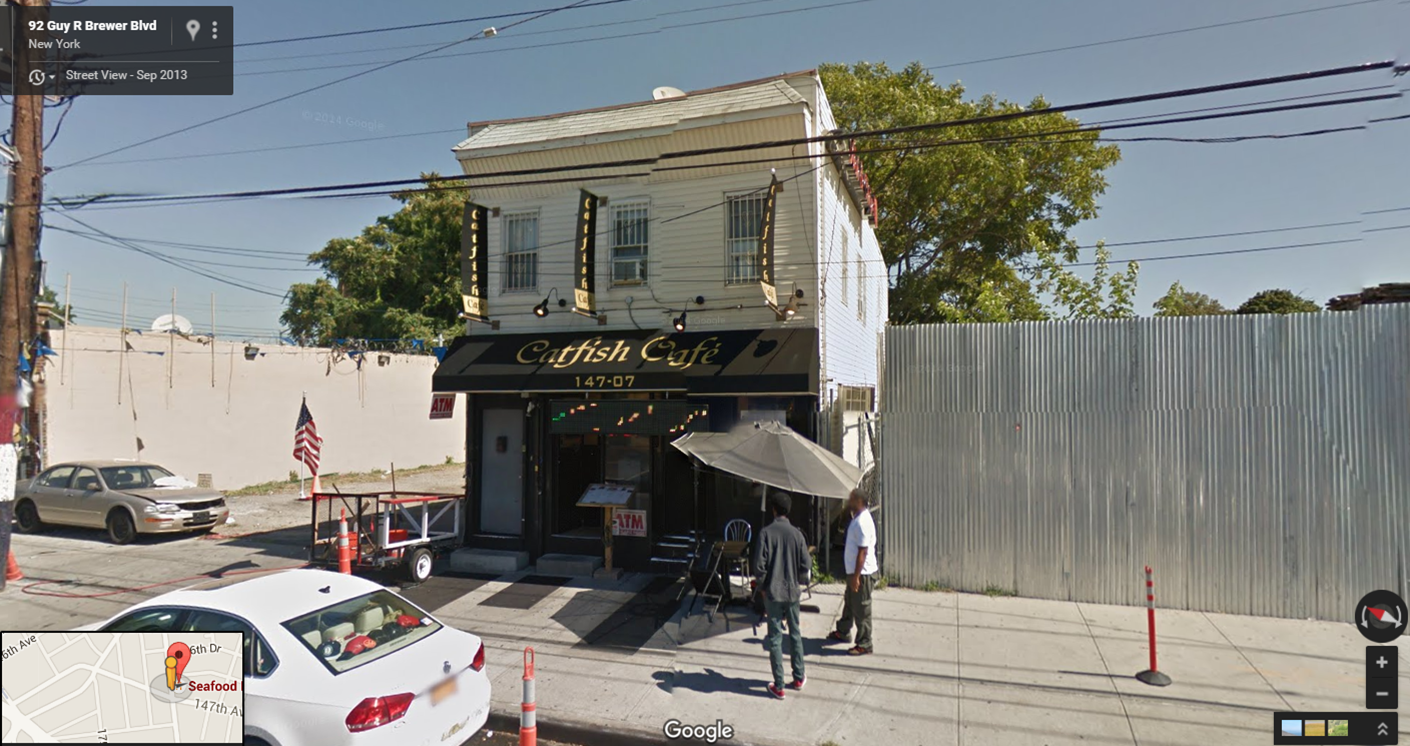
This seafood restaurant in a lower income community in Queens is doing lots of things right.
Transparent windows, outdoor seating, blade signs. 

The main take away is that a commercial district in a lower income community must find ways to ensure that every potential dollar that can be captured is in fact captured. There is little room for error. That means removing all possible hurdles that prevents customers from easily and conveniently patronizing local businesses. And in some cases, that means building the market to create more demand for retail - read new development. While that process can sometimes take a long time, with a strong road map and an understanding of the kind of market conditions necessary for business to thrive, I have seen time and again that neighborhoods can in fact change and improve, benefiting the residents that live there. 

Wednesday, October 21, 2015

Landlords start rejecting package delivery. What does this mean for city life?

It seems that apartment dwellers are facing down with landlords in the delivery wars. As Laura Kusisto writes in the Wall Street Journal ("Web-Shopping Deluge Boxes in Landlords", WSJ, 10/20/15), one of the nation's largest apartment operators has stopped accepting deliveries to avoid the complications of managing what have become mini-post offices in their buildings. However, not every landlord is scrapping package acceptance, and the article seems to suggest that the failure of a building to accept packages has a number of tenants riled up enough to move when their lease expires. Yet it is notable - and perhaps an inevitable outcome - that concerns of landlords are occurring at precisely the same time as people are buying more and more on-line.

So how might this trend impact our local commercial districts, particularly in urban areas where most of these apartment dwellers reside? Will limited package delivery encourage residents to purchase certain goods and services at brick-and-mortar stores? For certain specialty goods - the saved time, energy and cost might make the additional hassles of delivery worth it for the consumer. I might, for instance, choose to send a special package to my office and tote it home because finding that particular item in a store might take too much time. But for convenience goods, it is likely that the lack of delivery will have an impact. If you are now required to go to your local Fed Ex store (good luck getting there before it closes!) the inconvenience of that extra trip makes local shopping a little more worthwhile. These days time is money, and the availability and ease of on-line shopping has increasingly made it a viable alternative to the brick-and-mortar store. But if landlords start making delivery hard, the pendulum might just start swinging back in the other direction.

Wednesday, May 13, 2015

What does a burned out and looted CVS have to do with upward mobility?

The Baltimore riots came to be exemplified by a looted CVS 
I have been fascinated by the recent coverage of upward mobility in the New York Times ["In Climbing Income Ladder, Location Matters"]. This topic is of interest to me because our firm is often engaged in improving retail environments in under served urban communities. Consider the CVS that was looted during the recent Baltimore riots. Did you ever stop to wonder how long it took to attract a CVS pharmacy to that neighborhood? And do you think that CVS or any other retailer will be eager to return as things settle down, regardless of how much demand and need there might be? In the end, the politics of place matters quite a bit when it comes to improving the retail environment for local residents.

Neighborhood Environments Impact Outcomes
This is why I found the research that the NYTimes covered quite riveting. Two Harvard economists conducted a time series analysis on the impact of neighborhood environment on the outcomes of poor children. In short, they found that the neighborhood environment in which a child is raised is one of the most important determinants of income (by age 26). From the standpoint of a low-income family living in a low-income community and looking to meet the needs of their children TODAY, not tomorrow, the news is not good. Basically, the research suggests that mobility is the answer. Get the hell out, basically. But the authors acknowledge that this solution is not scalable, and I agree. Moving every family out of poverty stricken neighborhoods is not a long term solution. It’s a band aid fix for an intractable problem. The real problem is the quality of the neighborhood in which they live. Addressing that problem is where the future of public policy SHOULD be if we are truly interested in improving the outcomes of poor children over time.

So what kinds of neighborhoods produce better outcomes? If we can answer that question, we can begin to craft policy solutions that will support these conditions in low-income communities. The study found the following, places that had higher rates of upward mobility demonstrated five key characteristics:

- less segregation by income and race
- lower levels of income inequality
- better schools
- lower rates of violent crime, and
- a larger share of two-parent households

Policy Solutions?
According to the authors, “our findings provide support for policies that reduce segregation and concentrated poverty in cities (e.g., affordable housing subsidies or changes in zoning laws) as well as efforts to improve public schools.”

In the short term, we must, must, must find ways to do the following:
  • REDUCE the concentration of poverty and INCREASE racial diversity. This means encouraging economically integrated neighborhoods by combining efforts to attract higher-income families WITHOUT involuntarily displacing existing residents. That means building – yes, building – NEW housing. This in turn means that some communities will need to be rezoned for density. But while that happens, we must ensure that existing families have the opportunity to remain as a neighborhood improves. Some potential policies include strengthening landlord-tenant laws that prevent harassment of tenants, helping tenants with the right of first refusal and provide financing to enable them to buy their properties and stay in place, and providing incentives or loans to landlords that allow them to rehab their buildings in return for maintaining affordability. These are just some interesting ideas advanced by The Center for Community Progress.
  • Make these neighborhoods “communities of choice” by addressing the quality of schools, the quality of the physical environment, access and transportation to jobs, and the retail offerings and cultural amenities that make a neighborhood a compelling place to live. By doing that, we create an environment that is not only better for the people who live there, but is also attractive to people of all incomes and races who are necessary to ensure diversity.
  • Reduce violent crime. The impact of crime over time on the lives of children living in a community is significant. The study found that 20 years of exposure to high violent crime rates causes a reduction in average income. Not only that, but children get caught up in crime, paying a steep price through incarceration and shortened life span. Addressing crime is critical not just for people living in a community, but its common sense that crime has a strong negative impact on people’s residential decision making. Residential sorting – where people CHOOSE to live – is directly impacted by the crime rates in a particular neighborhood. So if we are trying to reduce poverty and encourage economic integration, we have to address crime too, otherwise those with a choice to move somewhere else will do so. 
While this is only the beginning of a conversation, I am extremely hopeful that this research will drive fact-based decision making and help change the dialogue public policy dialogue. 


Friday, May 1, 2015

Small Projects, Big Impact

The idea that small projects can have a big impact on commercial corridor revitalization is not new. The concept in real estate is well established ("Small Renovations, Big Payoff", NYT 4/24/15). It is pretty widely known that small upgrades like a new kitchen counter top and new cabinet fronts, offer a greater rate of return than a wholesale kitchen replacement. In fact, Remodeling magazine found that a minor kitchen remodel recoups 84% for the owner, but a major renovation with top of the line appliances recoups 69%.  

At the Local Initiative Support Corporation (LISC), the idea manifested itself in the Corridors of Retail Excellence Program (CORE), funded by PNC Bank. The program, a three year pilot, yielded tremendous success, from new businesses and development in communities as varied as Mount Washington in Pittsburgh and Fishtown in Philadelphia. In Philadelphia, LOA served as the lead consultant and worked closely with a local CDC to define an intervention that reflects community interest, existing resources and potential opportunities. Our effort took the form of a "Model Block" program, and involved the sprucing up of the 300 Block of East Girard. What started out as one isolated retail business became, after some creative placemaking efforts (including fresh coats of paint, new lighting and signage, and a great interactive fence) and consistent PR/communications effort, a node of three new retail businesses, two new restaurants and a new development on a vacant lot. 
300 Block of East Girard: Before...cars would zoom
by without noticing the one occupied storefront. 
After, new signage, catchy colors, and
new storefronts create a vibrant node of business activity.

An "interactive fence" serves as temporary exhibit space for
businesses - and has even served as the backdrop for concerts!

But really, none of this is new. These incremental improvements are how cities evolve and improve. What I do find interesting are the organized and increasingly branded efforts to help people professionalize these kinds of things. LISC CORE was one program, but others include Tactical Urbanism by The Street Plans Collaborative and The Better Block project. 

So the next time you are thinking about improvements to your corridor, keep in mind that less is often more. 


Wednesday, January 14, 2015

Who is powering the Main Street economy?

Patricia Blakely at The Merchants Fund sent me a great report today on the importance of immigrant business owners to "Main Street". [Bringing Vitality to Main Street: How Immigrant Small Business Help Local Economies Grow published by the Americans Society and Council of the Americas and the Fiscal Policy Institute]

The report underscores what I have seen time and again in my work in diverse urban communities, and particularly in secondary urban markets. Close to home, this includes communities like Ossining, NY where Mexican and Ecuadorian immigrants have opened businesses, and Glen Cove, LI where Central American immigrants are more prominent. In both cases, these communities have seen an influx of immigrant business owners who have seized opportunities in the downtown area.

The report has lots of interesting and little known facts about the importance of immigrants to traditional commercial districts.

Top Twelve Little Known Facts about Immigrant Main Street Business Owners
  1. Immigrants make up 28% of Main Street business owners, while accounting for only 16% of the labor force and 18% of all business owners. 
  2. 61% of gas station owners are immigrants
  3. 53% of grocery store owners are immigrants
  4. In the Los Angeles area, immigrants make up fully 64% of all Main Street business owners. 
  5. Immigrants are 10 to 15 percent more likely to be business owners than their U.S.-born counterparts. 
  6. They make up 18% of all business owners, but take home 13% of business earnings.
  7. Immigrant workers are absorbed into the economy with only modest displacement of U.S.-born workers. 
  8. Between 2000 and 2013, immigrants accounted for 48 percent of overall growth of business owners. 
  9. Between 2000 and 2013, immigrant Main Street business owners increased by 90,000 and U.S.-born business owners declined by 30,000. 
  10. Immigrants accounted for all of the growth in Main Street businesses in 31 of the country's 50 largest metropolitan areas. 
  11. Asians make up 49% of all immigrant Main Street businesses, ethnic whites make up 26% of immigrant Main Street businesses and and hispanic/latinos make up 20% of Main Street Businesses. 
  12. The top three immigrant groups that make up Main Street business owners include Koreans, Indians and Mexicans.  
This data serves as a policy clarion call to governments to actively help immigrants build their businesses, take advantage of incentives and initiatives, and improve the bureaucracies associated with business basics, like licensing and inspection.

With that, I'm off to my favorite local spot to grab a taco...yum.

The report defines "Main Street" businesses as those that fall in three board sectors: Retail, Accommodation and Food Services, and Neighborhood Services.

Sunday, October 19, 2014

As Baby Boomers age, are commercial districts poised to make a comeback?

The Shoppes of Avondale, Jacksonville, FL -
are walkable mixed use communities like these poised
to see an influx of Baby Boomer residents?
Is your downtown ready to take advantage of the downsizing Baby Boomer? Downtown Seattle, specifically the area surrounding Pike Place Market is one community seeing a growth in residential development fueled by aging Baby Boomers. In August of last year, the Wall Street Journal reported ("Hip, Urban, Middle Aged", WSJ, Aug. 2013) that a 34-unit condo with prices hovering over $1 million mostly went to Baby Boomers, many of whom were leaving their larger homes in suburban areas and heading to older, more walk-able urban neighborhoods. A recent study that LOA completed in Seattle found a similar trend - the projected Median HH Income growth rate in the downtown area over the next five years is 6.6% - significantly higher than that of Seattle as a whole, which is 4.39%. These "moneyed buyers [have] created a gold rush" according to Seattle realtor Dean Jones. In Denver, one resident quoted specifically mentioned the desire to "stop driving so much". The Washington Post went so far as to announce, "The kids gone, aging Baby Boomers opt for city life"(The Washington Post, July 2013)

This specific issue - what to do as Baby Boomers age and cannot drive - is increasingly fueling planning that must, by necessity, include downtown and mixed use districts. This week, the New York Times wrote about just this kind of retirement planning, "When Planning for Retirement, Consider Transportation", NYTimes, Oct. 2014. The couple profiled live in a San Diego neighborhood where "If you don't have a car, you're stranded". They are now exploring public transportation options that are weak at best, and are considered moving, but aren't quite ready to make the leap just yet. 

Another issue is the fact that transportation - specifically personal ownership of an automobile - eats up a huge percentage of income (25% according to the Federal Dept. of Transportation). As people age and move to fixed incomes, the need to reduce these costs become necessary, and the ability to live close to work, shopping, eating can reduce transportation costs to 9% of income.  

Moving to a more walk-able neighborhood seems like a great option as people age, but how do we reconcile the fact that, according to an AARP survey, 87% of people age 65 and older want to remain in their current communities? The good news is that the study found that this preference decreased with income.  ("Home and Community Preferences of the 45+ Population, AARP, Nov. 2010). 

Developers are also taking note. Toll Brothers, a home builder known more for their suburban tract housing than for their urban projects, has increasingly started developing in the urban core. Initially, they thought their projects would be filled with young people, but they sold a much larger than expected percentage to Baby Boomers. 

So it seems that yes, Boomers are creating a dynamic shift towards urban communities. Is your community seeing a similar demographic trend?


Friday, May 2, 2014

Malls dead? Big cities resurgent? Maybe, but not so fast.

In 2011,the Wall Street Journal announced "No McMansionsfor Millennials”. The Gen Y generation, those born between 1980 and 2000 and who number 80 million have made their preferences clear - 88% want to be in an urban setting, according to a survey conducted by the the KTGY Group at the National Association of Home Builders annual conference that year. This factoid was part of a fantastic keynote speech given by Chris Beynon of MIG this week at the Business Improvement Association of British Columbia/InternationalDowntown Association Western Regional Conference in Victoria, BC (where I was also presenting). As always, Beynon is a joy to watch, and his presentations are chock full of thoughtful insight into trends that suggest the future belongs to downtown, as long as we are prepared to grab it. His presentation got me to thinking, is downtown truly winning the fight against traditional malls? Are the malls really “dead”, as he seemed to proclaim?
Do younger folks want this?
Or this? 

I would be more than happy for this to be the case – but  I think practitioners need to continue to take the competition for shoppers quite seriously. In fact, embedded within the same WSJ article....while 88% of the Gen Y generation may WANT to be in an urban setting, cities can be “so expensive” that places with many of the same amenities in the suburbs (like shopping, dining and transit) will “do just fine.” And because malls are owned by single-owner entities, they have the kind of ability to morph and respond to market conditions in a way that the traditional downtown, with multiple owners and objectives, simply cannot. In a later session that day, I also heard the downtown practitioners from Calgary, Canada (where it snowed ALOT this year) complain about the difficulties their merchants have when competing with indoor, climate controlled malls. 

While it is true that only one new enclosed mall has been constructed since 2006 (in Jonesboro, Ark) owing in part to changing consumer habits (thank you Amazon), malls are changing to be something else…a bit more like downtown. Malls are getting wise to the changing needs of consumers. They are incorporating a wider variety of uses, from play spaces and activities in their common areas, to housing and office space. And the malls that remain traditional malls are not taking the beating from the internet lying down. They are actively reinvesting in their properties to remain attractive places for shoppers to spend some time. As the Wall Street Journal noted in 2012, “In an attempt to keep shoppers coming—and to squeeze more revenue out of established locations—mall owners and retailers are shifting to renovations.” (Malls Get Facelift to Pull In Shoppers, WSJ, 12/18/12). 

And while Gen Y and millennials seek urban environments, they are increasingly finding some of these environments outside of the expensive major cities.  My nieces – both of whom are in their 20’s and were raised in suburban New York – are now starting their careers and both have a strong desire to live in suburban communities. They visit small suburban downtowns like Nyack, NY to go out with friends for drinks and dancing, but they like their cars, they like the suburban lifestyle and they really don’t consider moving to the “city” a viable option. "Too expensive" they say. "Not enough space." "Good for a night out, but not for a lifestyle." And as a mom with a four-year old son, I understand the appeal. A little extra space, a small yard, a good school without too much stress associated with the decision…all of these things are driving some of my own friends from my wonderful urban neighborhood of Jackson Heights to options in the suburbs. And these suburbs are morphing too, offering urban elements in the small downtowns that are scattered throughout the region. My friends, with their cute home in Beacon, NY, within a stones throw of a walkable, pedestrian friendly downtown, have a pretty good thing going on. And yes, they also go to the mall, because where else are they going to actually try on clothing and purchase the shoes and school supplies that their kids need for school? So it seems, we have a long way to go before we kiss the mall goodbye.


Wednesday, March 5, 2014

Why you can't afford to ignore the trend towards bicycle friendly business districts.

What do Austin, San Franscisco, Portland, Chicago and Washington D.C. have in common? Why, an expanding network of bike lanes, of course! Expanding the transportation options and improving access to commercial districts is gaining steam, and here at the Commercial District Advisor we are generally pleased with this trend. Creating and maintaining a network of bike infrastructure is one critically important way to help local businesses. But the issue is not always so clear cut in some places, and implementing interventions that may change the business environment for long standing businesses needs to be managed carefully. For many businesses whose customers historically arrive by car, the lack of immediately accessible and visible car parking, not to mention the challenges of managing deliveries when a bike lane takes us the space immediately in front of a store, are a legitimate concerns for some businesses. If  existing customers find it less convenient to patronize a store, and the business has not yet started attracting new customers, there will be inevitable growing pains. 

The fight in New York's Upper West side, where a 6' protected bike lane was installed after facing resistance from the local Community Board, is indicative of what happens in many cities. The owner of a local lingerie shop, in business for 17 years, said "It's one more piece of space it's taking up, people are not riding their bikes to go shopping." ("Business Owners Dish on Columbus Ave Bike Lanes: From 'Love it' to 'It Sucks'", West Side Rag, 1/8/13). A number of studies by bike advocacy groups suggest otherwise. They have found that local businesses do in fact benefit from customers who arrive on bike, but it can take a little while to change shopping habits. For some businesses whose offerings and clientele include older, long-time residents, the changes can be a little tougher to manage. In fact, much of the argument on the Upper West side was split by an age demographic. A blogger for Streetsblog who was covering the Community Board debate wrote "I was at this meeting, and was struck by the age divide: older people against a bike lane...and younger people in favor." But as the blogger noted, the changes have also created a safer pedestrian environment, which benefits those who do not ride bikes as well. 

Perhaps most significantly for our purposes, and the reason why on the whole bike lanes are great for commercial districts, is because they are just plain good for business. A recent study issued on bike lanes found that "in growing urban communities, protected bike lane networks encourage more people to ride bikes for everyday trips. And when people use bikes for errands, they're the ideal kind of retail customers: regulars. They stop by often and spend as much or more per month as people who arrive in cars." (For the full report, click here: "Protected Bike Lanes Mean Business: How 21st Century Transportation Networks Help New Urban Economies Boom"). Business owners sometimes express concern that bike riders don't spend as much per shopping trip, but studies show that they spend more total and return more frequently than the customer who arrives by car. In San Francisco, the study found that bike lanes and wider sidewalks on Valencia Street improved business for 66% of businesses. 4% indicated it hurt sales. 
From: Protected Bike Lanes Mean Business

One very important and less mentioned benefit of bike lanes and bike infrastructure (and one that we trumpet quite regularly) is the ability to draw more customers from a slightly larger trade area. This is our primary reason for supporting this effort. Enlarging a district's primary trade area - the geographic area from which 60- 80% of a district's customers come from - is a great strategy for helping businesses grow sales. In walkable urban communities, it is not uncommon for someone to walk 10-minutes, or about 1/2 mile at a leisurely pace, to patronize a local business. A 10-minute bike ride on the other hand pulls people from a 1.5 radius (again, assuming a leisurely pace). We ran the numbers for the neighborhood surrounding our office here in Jackson Heights, Queens and the results were astounding. The difference in trade area was the difference between 67,789 potential customers and 366,564 potential customers. Wow. 

Source: ESRI, Census 2010. Based on a radius drawn from 78-27 37th Avenue, Jackson Heights, NY
So while change can be a difficult pill to swallow from some businesses, the implications of installing and maintaining a robust bike infrastructure cannot and should not be overlooked as a vital tool in the commercial district managers toolbox. 

Friday, February 21, 2014

Round Up: Low Cost, High Impact Tools to Address Common Issues

You don't need a big budget to make a noticeable impact in your commercial district. Here are a few tools that are easy and inexpensive to buy/download/DIY that help to address common problems.

The problem: There's a vacant storefront or lot that has become an eyesore OR You want to solicit community input for a new development, or retail attraction program, but aren't sure how.

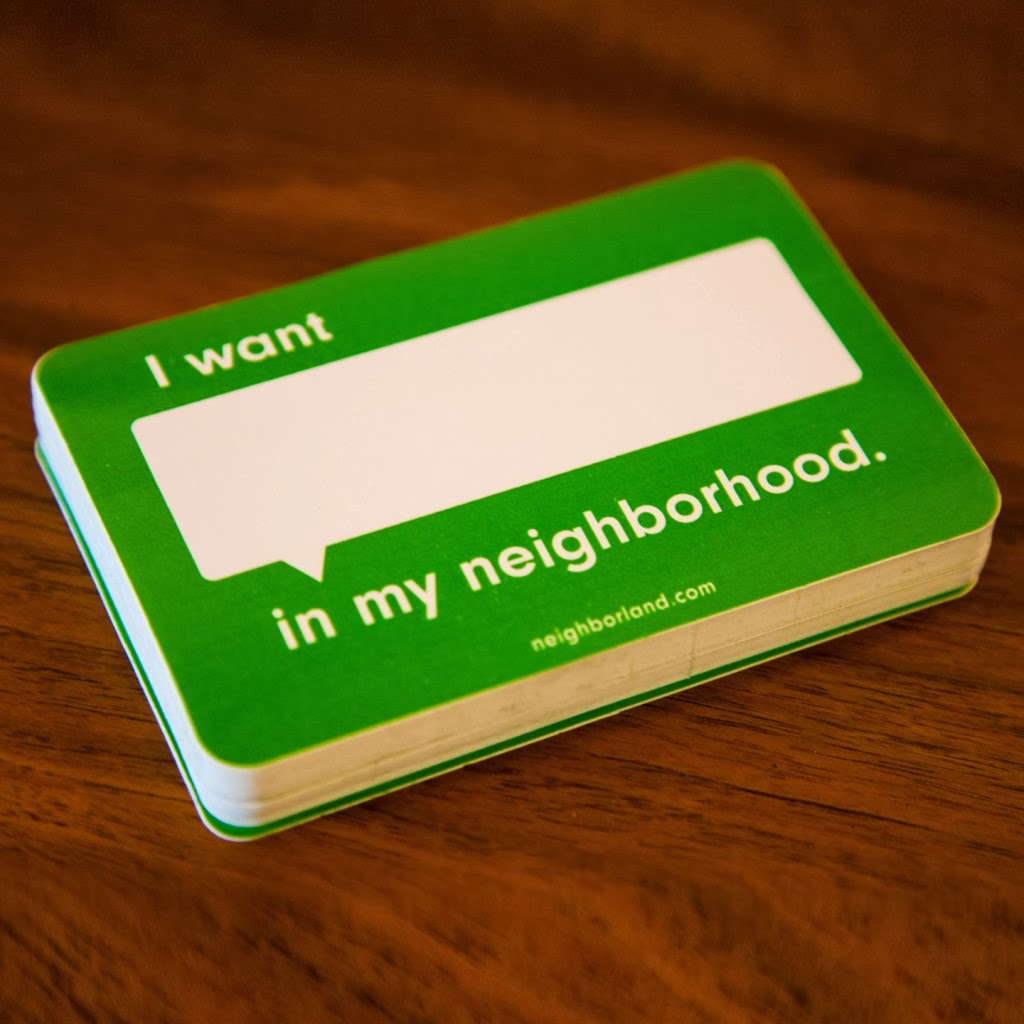
The solution: Neighborland's "I want _ in my neighborhood" stickers, or templates for mobile whiteboards to collect input in public space. Buy the stickers from their website ($0.35/each) and team up with the owner of a vacant site. It will draw attention to the space (a plus for the owner) and give you/potential retailers a sense of what people in the neighborhood want.


The problem: You have so many great attractions and amenities in your district, but not everyone knows about them, or how to get from one to the next.

The solution: Walk Your City's Sign Builder lets you design your own wayfinding system to make your community more walkable, and help visitors get from place to place. Using their online system - you design it, they print it, you install it.


The problem: You have empty tree pits, a vacant lot, or other spaces that could use a little greening.

The solution:Guerrilla Gardening.org shows you where to buy and how to make your own seed bombs to green your district or beautify vacant sites.


The problem: You've got some underutilized spaces that could be great - if only people had a reason to be in them.

The solution: Red Swing Project hangs swings in public spaces to "inspire playfulness" around the world. Download the free how-to manual on the website to make your own swing.

The problem: You want to do so many fun projects and you don't know where to start.
The solution: Betterblock.org has information on projects that communities are doing all over the country - from temporary bike lanes to pop-up stores, as well as a series of questions to help focus your efforts when planning how you are going to make a better block.


Author Kristen Wilke is a Project Manager at Larisa Ortiz Associates.