Showing posts with label Disaster Recovery. Show all posts

Tuesday, May 28, 2013

Far Rockaway Gets Support for Commercial Revitalization after Superstorm Sandy

Kevin Alexander, ED of RDRC giving APA planners a
tour of the devastation wrought by Hurricane Sandy.
As a member of the APA-NY Metro Chapter's Economic Development Committee, I am so pleased to announce the release of a report outlining post-recovery recommendations for the Rockaway Development & Revitalization Corporation (RDRC).

It Takes a Village
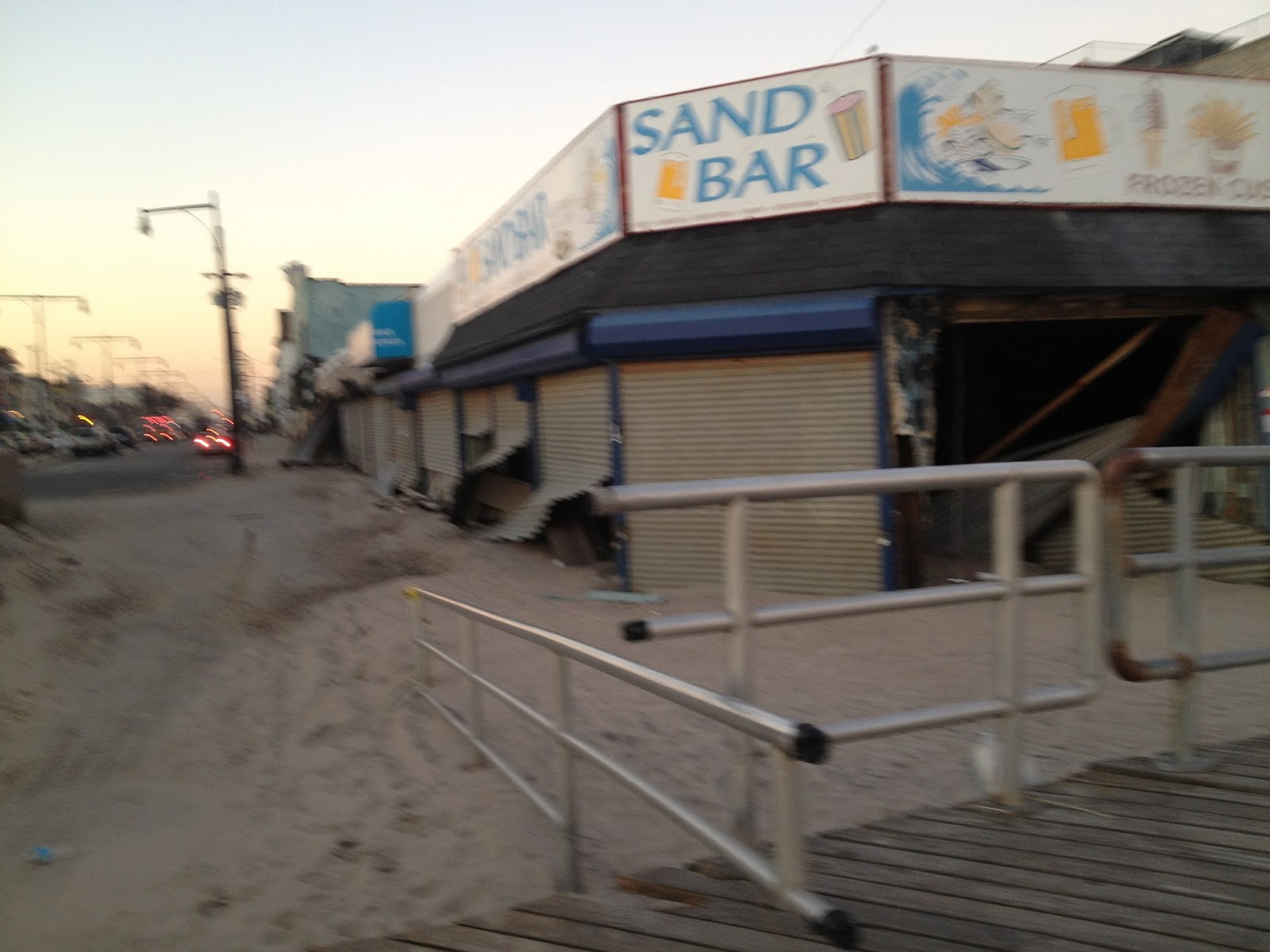
The aptly named "Sand Bar" along the
destroyed boardwalk in Far Rockaways, Queens 
After Hurricane Sandy hit, it was clear that many waterfront communities would need tremendous help with recovery, but connecting those in need with resources quickly can be difficult following a massive natural disaster like Sandy. The hurricane effectively resulted in the closure of 90% of all businesses in some areas of the Far Rockaways. Anyone involved in community development in the area was being besieged by calls for help, and figuring out how to manage and deploy those resources is a challenge onto itself. Like many others in the region I wanted to find a way to help, and so I reached out to my friend and Coro NL alum  Kevin Alexander, Executive Director of RDRC. His needs were herculean, and like many others affected by the storm, he was struggling to figure out where to begin. The first thing we did was set him up with Lucky Ant, a location-based crowd source funding site to raise a few thousand dollars for local businesses. I then put him in touch with James Rausse, the new President of the APA-NY Metro Chapter. Together we hatched a plan to engage interested local planners in a strategic planning exercise that would help Kevin develop a short term action plan for his organization's recovery response efforts. Our early efforts were further aided by yet another friend, Anat Gerstein of Anat Gerstein Inc, http://anatgerstein.com/ who helped secure critical press and television coverage. It's moments like this when you realize how critical relationships and networks are to getting things done quickly!

Diagnosing the Challenges - APA takes the lead
The APA NY Chapter was among the most significant outcomes of the effort to help RDRC. APA NY galvanized dozens of urban planners throughout the region and nation in an effort to diagnose the challenges and define a feasible recovery strategy for RDRC to follow. Volunteer survey teams, led by Mandu Sen and Nina Arron, approached a total of 297 businesses over the course of five months. The findings made it clear that even months after the recovery had begun, there remained a significant lack of coordination among City, State and Federal agencies. A key finding of the report found that most businesses had "difficulty taking advantage of available financial relief and other relief  because of the complexity of the required paperwork. Business owners did not have a clear understanding of the different roles of each government agency nor of the amount of time they should expect to wait for assistance." While "one-stop" shops for financial relief had been set up to help, we found that many business owners could not take advantage of these resources. The distance of these locations from their place of business made it difficult for them to pay a visit. Some business owners also had concerns about confidentiality and resisted visiting these locations. In other cases, the owner was often the only one available to tend to the store, making a visit impossible during store hours. Moreover, the fact that so many automobiles had been totaled during the storm made transportation to and from these centers very difficult.

APA Planners in action, including
James Rausse and Kevin Alexander in front of a
closed Key Foods grocery store. 
Offering Recommendations
One of the most significant recommendations in the report is that of a mobile recovery unit funded and staffed by Federal, State and Local governments to educate and provide one-stop technical assistance to businesses applying for grants, loans, and other resources. This would enable business owners to set up appointments and pay the mobile center a visit in close proximity to their place of business. The report encourages RDRC to apply for discretionary funding from City Council or private foundations and banks to seek capital needed to purchase a vehicle for this purpose.

Larisa Ortiz and Kevin Alexander in
front of a damaged business
While the report focused on small businesses, it also outlined a series of recommendations for transportation and housing, including the coordination of lower cost fares with the Long Island Railroad in light of the closure of local subway lines and the loss of many cars that had been waterlogged and rendered unusable.

For more on the report and the local APA-NY Metro Chapter, click here.

Thank you's are in particularly order to some of the planners who made sure this report made it to the finish line, particularly Hillary Papineau, Heidi Exline and Mandu Sen of the Business Recovery/Food Access Team!

Thursday, November 8, 2012

Help businesses in the Far Rockaways get back on their feet!


This short video vividly illustrates the devastation felt by small businesses along the commercial corridors of the Far Rockaways in the aftermath of hurricane Sandy. Yesterday's Noreaster has only made the situation worse. Please donate today!

For those interested in the backstory...Nate Echeverria, co-founder of Lucky Ant, a small business crowd-source financing site, reached out to me immediately after the hurricane to see if I could help connect them with communities in need. As Director of the Coro Neighborhood Leadership program, a leadership training program for BID and CDC Executive and Senior staff, I was more than happy to put them in contact with members of our alumni community, a number of whom were significantly impacted by the storm impacts. The first call I made was to Kevin Alexander, Executive Director of The Rockaway Development and Revitalization Corporation. Kevin described a scene of chaos and destruction that left his local business community reeling. Within three days of that conversation, this site was launched. It is amazing what networks and relationships can do in times of need!

For those of you working on NYC-based commercial district revitalization efforts, Coro Neighborhood Leadership is currently recruiting for the 2013 class.

Friday, November 2, 2012

Landlords, retailers recovering from Sandy...but it depends on where

The impacts of the hurricane are mixed for many local commercial districts. For local merchants in communities less affected by the storm, many reported higher sales this week on the days they were open, particularly as a number of national chains kept their doors shut during the hurricane. However, the impacts of the hurricane are still being severely felt along commercial corridors throughout the City. In Staten Island and in other places where electricity has not yet returned, corridor managers are concerned about looting. For those businesses that are open, sales have been extremely brisk - particularly for retailers selling post-hurricane related goods such as home goods and groceries. General merchandise stores will also continue to see sales increases. 

Overall, the industry anticipates significant impact from the storm. Citigroup, Inc has predicted that the "hurricane may cut retail sales by up to 3 percent nationally, with traffic falling 40 percent in the storm affected regions during the first week of November, which traditionally accounts for 22 percent of the month's sales." [Storm Latest: Landlords, retailers recovering, Shopping Centers Today News]. Some shopping destinations are turning need into opportunity. In New Jersey, Garden State Plaza is setting up tents to hand out water and dry ice to residents without power. And with transportation options still limited in so many New York neighborhoods, local commercial corridors that still have power are poised to benefit from the captive demand. 

An outline for Commercial District Disaster Recovery


By Jeff Eichenfeld

Jeff is Vice President of Retail & Commercial Assets at New York City Economic Development Corporation. A Bay Area transplant, he is well versed in helping commercial districts with disaster planning and recovery efforts. This outline is a helpful primer for communities dealing with the challenges associated with post-hurricane clean up and recovery. 


I.             Access and Entry Procedures
a.    For damaged buildings—emergency personnel will be able to get inside damaged buildings, but communities need written processes and procedures in place to allow business owners access to their inventory and records, and property owners need access to inspect damage for themselves, while at the same time making sure their safety is ensured.
b.    For a district as a whole—again, emergency personnel will be able to get into damaged areas, but other local and state officials and business and property owners, media, etc. will also need safe access.

II.           Building Damage and Repair
a.    Damage assessment procedures—FEMA and local building officials will do this, but make sure historic preservation experts who understand historic building systems/issues are included on these teams; also develop a communications plan so that the public understands what FEMA “red tag, yellow tag, green tag” designations mean.  The goal is to avoid unnecessary “red tag” designations that might lead to premature demolition.
b.    Demolition controls
                                 i.      Historic preservation—discuss how local and state historic preservation and environmental review laws will be applied in an emergency.
                               ii.      Shoring and Stabilization—discuss and develop shoring and stabilization procedures so that building owners and local officials will have adequate time to determine the fate of severely damaged buildings that have significant economic or historic significance to the community.
c.    Repair standards and procedures—determine to what design standards buildings will be required to be repaired to, and if “as-was-before the disaster” repairs can be made via a more streamlined process than would be used for demolitions, new constructions or major additions or modifications.

III.          Economic Recovery
a.    Business relocation plans—identify alternate locations for displaced businesses, as well as parking lots where temporary tents (large hard shell tents) and trailers can be erected; identify who will be in charge of facilitating and promoting the relocations.
b.    Promotions and public relations—develop potential strategies and who will be responsible for organizing local “back-to-business” news and tourism recovery programs.
c.    Financial assistance—discuss loan, grant and private fundraising options.
d.    Attracting new anchor uses—anticipate the need to attract new anchors to replace displaced businesses---i.e. temporary pop-up businesses, street vendors, farmers markets and crafts markets.

IV.         Business District Management
a.    Staffing—anticipate the need for additional BID or city staff and the possibility that existing staff may be injured or displaced or otherwise unable to come to work.
b.    Rumor squashing/communications—hold frequent community meetings and publish flyers/newsletters; anticipate that electricity and internet access may be limited.
c.    Organizational recovery—anticipate the need to boost the organizational capacity of existing local non-profits, BIDS and government units that will have to take on disaster recovery duties.
d.    Organizational preparedness—conduct annual disaster drills at the local level that include local business organizations, historic preservation and cultural arts allies, as well as local building and emergency response officials.

Retrofitting
e.    Buildings—develop long-term plans, ordinances and financial programs to retrofit buildings to withstand damage.
f.       Infrastructure—develop long-term plans and financial mechanisms to upgrade utilities, roads, and other community infrastructure to withstand damage.

V.           Vision Planning
a.    Desired land uses—update zoning, land use and design plans to reflect the way in which a community or district would want to re-build after a disaster.
b.    Recovery plans—develop disaster preparedness and recovery plans that include economic as well as physical recovery.

Wednesday, October 31, 2012

Hurricane Relief Resources for Commercial District Managers


As a New York-based organization, our heart goes out to the millions affected by Hurricane Sandy. In Jackson Heights, Queens, where our offices are located, the effects were minimal. Many trees fell, but miraculously there was little damage to structures. 

Across the City, Business Improvement Districts are now mobilizing for recovery as many of local businesses continue to feel the impact of the hurricane. In our local BID,the 82nd Street Partnership, a number of signs and awning have been damaged that will need repair. But other than that we fared pretty well. 

See below for a good overview of resources, sent by the Flatiron BID District this morning.

***

New York City, including the Department of Small Business Services (SBS) and the New York City Economic Development Corporation (NYCEDC), is coordinating a set of services to assist small businesses in recovering from Hurricane Sandy. Below is an outline of available programs and relevant contact information. 

New York City Business Assistance Programs

For small- to mid-sized businesses that have experienced business interruption
Emergency loans will be available, patterned after similar programs deployed in past emergencies. Loans will be capped at $10,000. Please click this link to contact an NYC Business Solutions Account Manager or call 311 and ask for NYC Business Emergency Loan.

For mid- to large-sized businesses that need to undertake rebuilding
An emergency sales tax letter from New York City Industrial Development Authority (IDA) will be available allowing businesses to avoid payment of New York City and New York State sales taxes on materials purchased for rebuilding. IDA will also waive all fees and, while following State law, look to streamline its normal procedure. This program is expected to offer economic benefits to reconstruction projects costing $500,000 or more. Please contact Shin Mitsugi atsmitsugi@nycedc.com for further information on this program.

For any business that is temporarily displaced from its space
Short-term "swing" office space at Brooklyn Army Terminal available free of charge for the next30 days. NYCEDC has approximately 40,000 square feet of warehouse space at the Terminal that can be used for this purpose. Please click this link to contact an NYC Business Solutions Account Manager or call 311 and ask for NYC Business Solutions.

For any business in need of other emergency assistance
The SBS Business Outreach Team and Emergency Response Unit's Large Scale Response Team will be deployed after the storm to help all impacted small businesses. This team is currently on-call for any storm-related business inquiries and is closely coordinating with the NYC Office of Emergency Management. Please click this link to contact an NYC Business Solutions Account Manager or call 311 and ask for NYC Business Solutions

Federal Aid Programs for Disaster Recovery

Click here for information from the Federal Small Business Administration on disaster recovery assistance.