Showing posts with label Chain Stores. Show all posts

Friday, January 5, 2018

Center for an Urban Future releases the "10th Annual State of the Chains" report

I am always eager to read the 10th Annual State of the Chains report issued by the Center for an Urban Future (CUF). While focused on New York City, the comprehensive nature of the data and analysis have implications for other cities as well. The fact that one-fifth of all national retailers closed stores in the past year is simply astounding and confirms what we have also noted in our own research nationwide. Additionally, food remains a driver of retail growth, but the findings in the report offer some more specificity - growth has occurred in bakeries, mobile phone chains, frozen yogurt, and fast-food/fast-casual chains. On the other hand, electronics, office supplies and shoe stores, items that are quite easy to compare and purchase on-line have seen the most shrinkage. As we move forward there are more questions to answer - such as how much more food can we support before the market is fully saturated? And after that, what else takes its place? These are all questions we will be thinking about in the coming year.

Back to the report....CUF Executive Director Jonathan Bowles' summary is included below an offers a good synopsis of the report, which can be found here.

*****
From Jonathan Bowles....

Our report, published on Thursday, finds that the number of national retail locations in the city increased for the ninth consecutive year. However, the report shows that a growing number of national chains appear to be facing new challenges from online competition. Although the city’s economy overall has been expanding, a fifth of all national retailers on our list closed stores in the past year, and only one-in-seven retailers increased their footprint—the smallest share since we began keeping track a decade ago.

Our report finds that food establishments drove much of the growth in chain stores over the past year, while retailers that compete most directly with online outlets—such as shoe and electronics stores—experienced significant contractions.

This year’s report includes a special analysis of how the chain store landscape has changed over the past decade. Among the key 10-year trends:
  • There are now 952 chain coffee shops in New York, 65 percent more than a decade ago, led by Dunkin’ Donuts.
  • Fast-casual dining chain restaurants in the five boroughs increased 105 percent over the past decade, from 141 to 289 stores.
  • The number of fast-food restaurant chains grew 14 percent, from 1,107 to 1,261 stores.
  • Food-related chains are responsible for 41 percent of the growth in national retailer locations in New York over the past ten years, the most of any category.
  • There are fewer than half as many electronics shops in New York today as there were in 2008: down to 53 locations in the five boroughs, compared to 144 stores ten years ago.
  • During the same period, the number of shoe retail chains decreased 16 percent, from 239 locations to 207.
  • The number of chain bakeries has more than tripled over the past decade, from 55 to 161. This is in addition to the growth in fast-casual chains.
  • Chains that specialize in frozen yogurt, such as Red Mango and 16 Handles, have expanded by 283 percent—the largest growth rate of any retailer category. In 2008, there were 12 chain yogurt stores, and today there are 46.
  • In contrast, ice cream chain stores have been steadily declining for a decade. The number of ice cream shops decreased from 376 in 2008 to 311 in 2017, a 17 percent drop.
  • Mobile phone service chains added 621 locations in the past decade, going from 233 locations in 2008 to 854 in 2017.
  • Office supply chains have lost 25 percent of their locations, falling from 63 stores to 47.
*****
Enjoy!

Tuesday, May 9, 2017

Why commercial rent control is such a hard sell

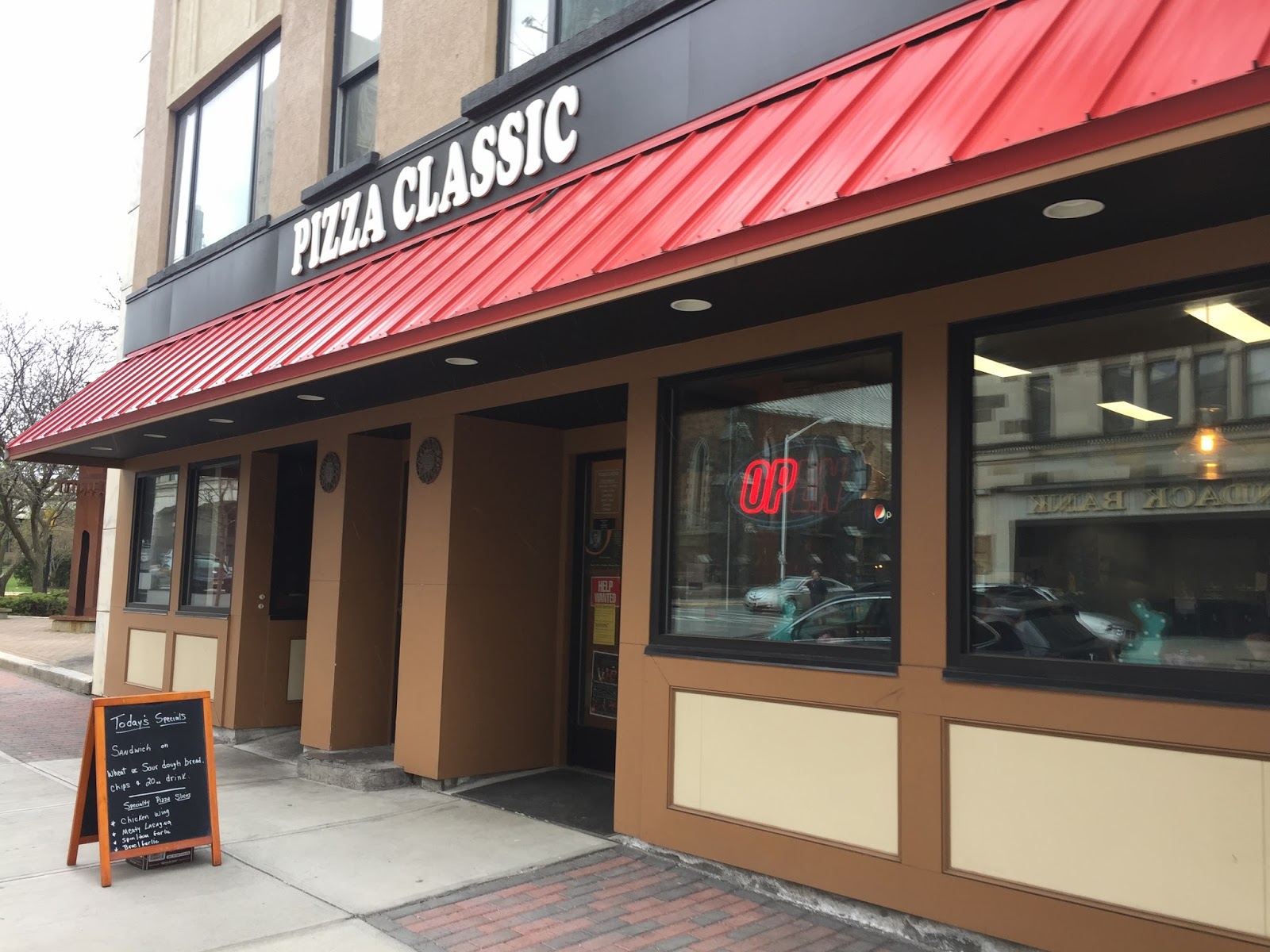
On a recent visit to Utica, NY as a presenter at "Main Street Boot Camp", a workshop sponsored by the New York State Office of Community Renewal, I left the hotel for lunch. Downtown Utica is stunning. But the streets were quiet. It was cold and rainy and I didn't have much time, so I turned left out of the hotel and ended up at the first restaurant I saw. A local pizzeria. I walked in and at once regretted it. The space was dark, the food under the heat lamps looked unappetizing, and while there were a few people inside, it was fairly empty. The restaurant had clearly been there for awhile. I walked up to the counter and asked about salads (which were not listed on the menu). The woman behind the counter handed me an old menu and I saw the options were limited. I was embarrassed to do it, but I turned and left without ordering.  I thought for sure I could better.  I walked another two blocks in the drizzle and stumbled upon another dining spot. It had transparent windows and from the outside I could see the place was buzzing. This time I opened the door and the line was backed up all the way to the door. There was not a single place to sit! After waiting in line for ten minutes, I was told that the kitchen was so busy that it was going to take another twenty minutes for my lunch. Unfortunately I didn't have the time. So I went back to the hotel - now three blocks uphill - and ate a mediocre buffet at the hotel restaurant.

My take away? It was pretty clear that the pizzeria was no longer meeting the needs of the local customer base. The business owner hadn't invested in the storefront or the interior appearance in quite some time. The place was stale, and felt like it. On the other hand, a healthier food concept down the street could barely meet demand.  And while I can't say for sure, it's more likely that the owner of the pizzeria is the one griping about high rents. As a public sector partner, differentiating between these two kinds of businesses when applying public policies is exceedingly difficult. How can you ensure that limited public resources - resources that could be going to schools and parks and public resources - are not being utilized to help business owners who quite frankly should be doing a better job. And to make matters worse, some communities are pursuing policies that might even penalize success. Imagine that the small, local restaurant was so successful that it rapidly spun off a few additional restaurants. Don't we want that kind of small business growth? Yet sometimes well intentioned policies like "formula ordinances" (policies that limit stores that share a "formula", including menu, decor and offerings, i.e. chains) are put in place that effectively prevent businesses with too many stores from locating in certain defined districts. While these policies may have their time and place, these two businesses should give us pause before we employ such blunt tools to solve for problems that require much more nuanced approaches.

This pizzeria was in clear need of updating, inside
and out. It was my first lunch option. And despite
not knowing whether I would find another lunch
spot down the street, I took the chance. 
This bakery/cafe, about a block away, was
packed to the gills at lunchtime.
They were clearly doing something right. 
Inside the bakery/cafe, patrons were standing around
waiting for tables or for their orders.

Thursday, November 3, 2016

Retail Insights: Does the growth in on-line retailing spell doom for downtown? And what can you do about it?

Last year e-commerce sales hit $343 billion - that is triple the figure it was just ten years ago. Upon hearing this, many cities and towns across the country have started scrambling to address the issue. But like most complicated issues, the challenge from e-commerce is more nuanced than that $343 billion dollar figure suggests. For example, Amazon.com, the largest on-line retailer in the market, comprises a mere 1.4% of all retail sales. And according to a report by Mckinsey & Co., only 35% of Amazon's customers transactions are fulfilled by Amazon itself. That means that the balance, or 65% of all Amazon sales are derived from third party sellers. Another issue with the figures is that they reflect sales from BOTH pure-play Internet retailers AND bricks-and-mortar retailers who are selling on-line. When we dig further, pure-play Internet sales likely represent only about 3% of total sales, according to a report by the International Council of Shopping Centers.

This does not mean that our Main Street businesses are out of the woods. Mckinsey estimates that some retailers will see a decline in in-store sales by 5-7% a year. Others in the industry suggest the impact will be as high as 10-15% of sales. For a small business, really for any business, that is the difference between paying rent and shutting down. Businesses will also face pressure from shoppers who can quickly and easily compare prices - often while they are in the store - and elect to spend their dollars elsewhere if they find a better price. But the cards are not all stacked against smaller merchants. High-touch items (like apparel) and experiential activities (like dining), continue to drive customers to physical stores. And a shopper that is in a store is much more likely to purchase something - even at a slightly higher price point - because the inconvenience and time cost associated with going elsewhere may not be worth it.

So, are customers changing the way they shop? Absolutely. Will there by casualties among brick and mortar retailers who don't keep up? Without a doubt (see Sports Authority and Aeropostale). But the line between virtual and actual stores will become blurrier over time, not more divided. Experts suggest that E-tailers are outgrowing their digital footprint and seeking space in the real world because they know that giving customers the opportunity to see and touch merchandise is critical to sales. Consider Modcloth, a on-line only retailer who recently opened a store in Pioneer Place in Portland, Oregon. Or Fabletics, Blue Nile, Birchbox, Amazon, Bonobos, Warby Parker, Peleton, etc...all of which have opened physical stores. This doesn't always mean they sign long-term leases for traditional retail space - in some cases kiosks or pop-up stores help bridge the gap between an on-line seller and a brick and mortar presence. Amazon, for instance, has set up 16 pop-up shops around the country that allow people to test products and services and has indicated plan to open as many as 400 brick-and-mortar stores. According to GGP CEO Sandeep Mathrani, 60% of venture capital money being raised today is focused on bricks-and-mortar store.

If we can understand why e-tailers are opening bricks and mortar stores, we can begin to understand the opportunities inherent in a physical location. These include higher conversation rates among customers, i.e. the likelihood that someone who walks into your store will buy something. E-tailers  also recognize the power of brand awareness. "Thousands and thousands of customers have discovered us through Nordstrom" Bonobos CEO Andy Dunn told Bloomberg journalists in February, going on to say, "we view is as a way to reach a much more diverse audience much more quickly."

Here are a few others things to be on the look out for as e-commerce changes the way people shop...

Demand for smaller space will rise
Another opportunity is the potential reduction of physical square footage necessary for traditional big-box retailers. Consider Target's aggressive growth of the "CityTarget" brand. Customers can purchase from Target and arrange for store pickup - effectively making the target a fulfillment center/warehouse right in the middle of the commercial district. Consider Target's new store planned for Central Square in Cambridge, MA. It will consist of a mere 21,000 sf of space on two levels (paltry compared to the average target store of 135,000 sf).

Businesses will need to invest in omni-channel sales 
As e-commerce grows, small businesses will need to get in on the action. Businesses looking to participate in the on-line sales game have a few options. In a previous post, we described a few ways in which businesses can sell through established venues (like Etsy or Amazon) as well as a few tools that allow them to create their own websites. BID's and City's can help support the growth on omni-channel selling by providing training and technical assistance to businesses.

Small businesses will begin to incorporate home delivery
Local businesses are already in the community, and with some investment in delivery, can serve as mini-fulfillment centers as well. The benefit is that if something goes wrong, the customer knows precisely where to go and who to talk to to remedy a situation.

An omni-channel sales effort will cannot end with the launch of a website
Putting a website up cannot be the end all be all. Without clever marketing, especially on on-line platforms and social media sites, efforts to sell on-line can fall flat without the right follow through. This is where many businesses falter - they may not have the staff or resources to maintain and build an on-line presence. Many small business owners are just trying to run their business. We posit that this is where a supportive organization - like a BID or Chamber - can be extremely helpful, but pooling together resources and launching marketing campaigns that draw attention to businesses that are selling on-line. They can also enlist local colleges - a business school marketing class, for instance - can be a great opportunity for businesses to get help they need from savvy young people looking for real world experience and the social media know how necessary to build on-line awareness of the website.

Enhance the experience
As we have written about before, (see How can downtown remain competitive in the face of online shopping?) malls are increasingly looking to round out retail offerings with experiential activities - things that, you guessed it, cannot be accomplished on-line.  The Palisades Mall, a super-regional mall outside of New York City has built a ropes course in what used to be an open atrium.

In this time of rapidly evolving shopping habits, small businesses are being challenged. Those that succeed will be the ones that continue to embrace new ways to meet customer needs through high quality service, on-line purchasing options, and an unrivaled in person experience that allows a shopper to touch and feel the merchandise. The goods news is that these are things that our downtown merchants are poised to offer in spades.


Wednesday, September 28, 2016

Retailer Spotlight of the Month: Joe and the Juice


Joe and the Juice is a Danish joint offering juices, shakes, coffee, sandwiches and other healthy quick meals. Since the opening of its first store in New York City’s SoHo neighborhood in 2015, the chain has quickly expanded to six other locations in Manhattan alone. The stores have contemporary trendy design and a lively young atmosphere.


Price Point: moderate


Target Market: millennials, hipsters, and patrons looking for quick healthy meal alternatives


History:  Joe and the Juice was founded in 2002 by Kasper Basse, a former karate champion, who wanted to create a healthy take-away place in Central Copenhagen. Since then the concept has expanded to 14 countries.


Expansion Plans:   With 7 locations in Manhattan and 2 coming to Florida and San Francisco, Joe and The Juice is quickly expanding its footprint in the American soil with plans to roll out additional locations in the next few years.


Site Requirements:  Flexible; stores vary from 1,200 to over 4,000 SF


Contact Info:


Wednesday, March 23, 2016

Introducing “Retailer Spotlight of the Month”


Through our work on retail attraction we often come across a variety of chain-lets that are growing and looking for expansion opportunities. We also come across a number of commercial corridors who are retail ready and actively looking for retail prospects. Building relationships is a big part of what we do, so we thought would be a great idea to create a monthly post that profiles expanding chain-lets to provide our readers an extra resource in their retail attraction efforts.  Every month we will be featuring a new retailer, so if you have retailers expanding in your district and would like to share in our blog, let us know!

Retailer Spotlight of the Month: Caffe Bene

Caffe Bene is an international coffeehouse chain designed after European open-air cafes. In the US Caffe Bene sells a variety of hot and cold beverages (coffees, teas, smoothies and its signature Misugaru), pastries, sandwiches, and a variety of waffles and gelatos. 

Image Source: http://blog.blurealtygroup.com/2014/02/08/blu-realty-groups-andy-kim-becomes-exclusive-broker-for-caffe-bene/

Price Point: Moderate

Target Market:  Coffee enthusiasts, families, tourists and office workers.

Image Source: http://www.koreaherald.com/view.php?ud=20140218001456

History: Caffe Bene was founded in 2008 in South Korea and has rapidly expanded to other countries including the U.S. (over 100 stores), Canada (1store), China (283 stores), among others. 

Image Source: http://www.tripadvisor.com/Restaurant_Review-g2024869-d3934658-Reviews-Caffe_Bene_Green_Hospital_Store-Guri_Gyeonggi_do.html

Expansion Plans: In the US Caffe Bene adopts a franchise model and is actively looking for expansion opportunities in both urban and suburban locations.

Image Source: http://www.yelp.com/biz_photos/caff%C3%A9-bene-irvine?select=DYoHVPQW-fWGRWnuYkYN3A#fhbe-r3IMcBtRonyw8Jvxw

Site Requirements: Caffe Bene adopts a flexible floor plan model which allows stores of a variety of sizes and locations, from prime Times Square real estate to convenience commercial corridors in more modest working class neighborhoods.  According to their marketing materials, their suitable locations include non-traditional sites such as airports, hospitals, convenience stores, cinemas, hotels, zoos, casinos, museums, amusement parks and sports arenas.

Image Source: http://www.creamy-dreamy.com/2014/08/bingsu-bingsu-caffe-bene-gurney-paragon.html


Contact Info:    New York
1430 Broadway, Suite 1401 New York, NY 10018
Franchise: 800.284.8053
Office: 212.575.5484

Los Angeles
5670 Wilshire Blvd #760 Los Angeles, CA 90036
Franchise: 844.833.3500
Office: 323.933.3500

                          http://www.caffebeneusa.com/

Tuesday, December 22, 2015

What the re-branding of Deals by Dollar Tree will mean for commercial corridors


We recently heard the news that Dollar Tree, the parent company of Family Dollar, will re-brand hundreds of its Deals stores into Dollar Trees or Family Dollar by next summer. At ICSC Deal Making early December, I spent a few minutes chatting with one Dollar Tree’s Real Estate Coordinators who confirmed the news: by the end of July 2016, Dollar Tree will convert 217 Deals stores into Dollar Tree Stores and five others into Family Dollar stores.


We have worked with a number of communities who have in recent years attracted a Deals store to their corridors, and they were all very happy with it. In many instances, the opening came through a lot of hard work to convince a national retailer to invest in low-income communities. In fact, the opening of a Deals store in many inner-city corridors signaled the retail potential that these communities have to offer and usually have had a catalytic effect by attracting other retailers to the area.

Deals stores sell a variety of discount items including toys, party supplies, seasonal items and home products at multi-price points. Dollar Tree sells everything for $1 or less, and Family Dollar sells a variety of items and national brands for $10 and under. Despite being a discount store, Deals has developed an image associated with affordable but quality products.  On the other hand, Dollar Tree and Family Dollar are usually perceived as downscale stores. I asked a commercial district manager here in New York what she thought about the change and she said: “No more 99 cents stores please!”

However, a recent look at Dollar Tree and Family Dollar stores reveals that both brands are working to improve their image and product selection, especially in their new and/or rebranded stores, which may surprise many shoppers coming in for the first time. The change from Deals to Dollar Tree or Family Dollar might also help older Deals stores (stores built 10 or more years ago) and that would benefit from the renovation and retrofitting that re-branding will bring.


So the change from Deals to Dollar Tree or Family Dollar might not be such bad news after all: its implications to commercial corridors, especially traditionally disinvested inner-city corridors, will depend on how the parent company does the retrofitting of stores (the attention to the façade and interiors) and whether the quality of products offered in the retrofitted stores match previous offerings from former Deals stores.

Tuesday, April 14, 2015

What's the Formula for Staying in Character?

Jersey City, New Jersey's second most populous city, has downtown character that current mayor, Steve Fulop, is trying to protect.

Jersey City now joins a select group of cities, most notably San Francisco, that aim to limit the number of chains in their communities. In Jersey City, the  proposed city regulation would set a limit of 30 percent of commercial space in downtown rented to businesses with 10 or more locations within 300 miles of the city. This kind of regulation is also known as "Formula Business Restrictions", and in general seek to limit chain stores with "multiple locations within the region that exhibit standardized characteristics such as logos, menus, store decor" and more.  In Jersey City, grocery stores will be exempt. Typically, the goal of these restrictions is to support a vibrant retail sector by limiting the number of chain stores competing for space and thereby reducing commercial rents - or at least the rising pressure of rents over time. Whether the facts on the ground bear this result out over time are yet to be seen. To my knowledge, there is no longitudinal study that would allow us to definitively determine whether these restrictive ordinances do what they intend to do - keep rents down in a way that results in a vibrant independent business environment.

What I do know is that San Francisco's Office of Economic Analysis recently completed a study of the impact of the 2008 Formula Restrictions and found that on balance, a significant impact of the regulation has been the higher prices that local residents are forced to pay for goods and services on the whole. They also conclude that formula restrictions "increase vacancy rates". According to the OEA, the conclusion of the study was as follows: "expanding the definition of formula retail in the city will not expand the local economy". Strong words from the very City that has led these efforts nationwide. It should be noted that the study's findings have been criticized by the Institute for Local Self Reliance, a think tank that has long supported such restrictions, for overestimating the price differential between chains and non-chains and not accounting for the higher percentage of expenses that small businesses spend on wages. However, OEA looked at this assumption and found that larger retail establishments employed 4.3 workers per million dollars in sales than smaller retailers, who employed 3.2.  So it seems the verdict is still out on this one.

But back to New Jersey. Not surprisingly, business and real estate groups are opposed. New Jersey Retail Merchant Association  president, John Holub, noted "We totally are obviously supportive of a vibrant, independent retail sector in the city, but to artificially try to control market forces is troubling."

Mayor Fulop wants to see Jersey City as a destination that pulls in visitors from all over and noted that chain stores such as TGI Fridays, Starbucks, Applebees, and Gap don't have that magnetism that draws destination seekers to them. That may be true - and laudable goal overall - but it is not without costs and impact felt by all.

Article link.

Authored by Larisa Ortiz, Principal of Larisa Ortiz Associates
and Scott Landfried, LOA staff

Monday, January 12, 2015

What do you get when health care needs and vacant retail space collide?

An Urgent Care Clinic recently opened
on a busy retail corridor in my neighborhood. 
For anyone driving past commercial strips lately the answer is obvious. Urgent Care Clinics. 

Retail medicine is what this is being called - and urgent care providers are looking for many of the same things that other retailers looks for - visibility, convenience and lots of traffic. The high visibility is important because folks often don't plan visits to urgent care as they would with their regular doctor. So a tucked away office just doesn't cut it. Patients instead go to the places they remember passing on the way to and from work, or the one next to a store or shopping district that they frequent.  

And watch out, because the industry is growing rapidly. In 2014 the industry took in $16 billion and handled 160 million visits. According to Bloomberg News, "the number of walk-in retail clinics in the U.S. has risen 20% since 2009, to 9.400 last year". 

Landlords like medical tenants because they have good credit, sign longer leases and are willing to pay the kinds of rents that landlords have come to expect. The industry is structured much like traditional retail, including independently owned chains like American Family Care, based mostly in the Southeast, and Concentra, a publicly traded company with 300 locations nationwide.

So the next time you are trying to figure out what to put into vacant ground floor retail space, you might want to consider taking a look at urgent care clinics. Below are the top five largest chains. 

Source: Forbes.com
Resources and reading:

Friday, February 21, 2014

Walmart opening more Neighborhood Markets

February 21, 2014 - Walmart faces sluggish sales and will seek to double the number of smaller new stores planned in the coming year. The retailer has seen sales increase by 5% last quarter at their smaller format stores, called "Neighborhood Markets", compared to falling sales (.4% drop) at their traditional stores. In an announcement, they called this the "next generation of retail". Analysts suggest they are feeling pressure from the success of Family Dollar, which has expanded rapidly in many under served urban markets the past few years. Walmart announced plans to add approximately
270 to 300 small stores this year, double its initial forecast of 120 - 150 stores. They currently operate 346 Neighborhood Markets and 20 Walmart Express stores. The Neighborhood Markets are approximately 38,000 sf (compared to 106,000 sf for traditional Walmart stores). The company is also testing 2,500 sf, college-based convenience retail called "Walmart on Campus".

If you think you have a site for consideration, you must gather and submit the following information:
1. Site Plan
2. Property Boundary Information
3. Aerial Photography (if available)
4. City Map with Property marked on the Map
5. Zoning Information
6. Your contact information
This information can be sent to the appropriate real estate manager for your region.  A territory map of real estate managers can be found by clicking here.

Resource Articles


Tuesday, April 9, 2013

Struggling to get retailers to pay attention? Consider producing an annual research report.


Most national retailers make decisions based on their own market research. And these days, market data is easy to come by - retailers and investors have market data at their disposal within minutes. Most begin by looking at traditional indicators such as number of people, number of households, median income and trade area. If your community is coming up short on any of those indicators, you have your work cut out for you.

But don’t despair, there are opportunities to influence retail site selection and control the narrative. Many retailers are interested in urban markets but don’t have enough information to make a compelling case. A 2008 study by the International Council of Shopping Centers and Social Compact found that retailers want, but struggle with finding information on daytime population, pedestrian traffic, consumer preferences, and neighborhood change as defined by anticipated development. In the absence of a dedicated downtown advocate, that case never gets made and investment gets made elsewhere. But fortunately, this is where a Business Improvement District (or Chamber, CDC, City, etc) can be particularly useful.

Increasingly, BIDs have begun to embrace their role as an information resource. Center City Philadelphia has a particularly robust reporting program. Their annual “State of Center City Report” even has its own webpage, and the report is positioned as a tool for investors with an emphasis on providing valuable – and hard(er) to obtain – information on employment trends (including employee wages and growth rates) and residential housing development.

Another good example is Downtown Portland’s “Business Census& Survey” , commissioned by Greater Portland’s Chamber of Commerce. This simplified version accomplishes a similar goal, sharing information about local employment trends and also incorporates findings from an annual survey of business owners and managers. What I particularly like is that the report functions in part as a report card, allowing downtown leaders to tweak public and private sector improvements on an annual basis. This level of transparency and accountability is a powerful response to many BID critics – it helps to keep everyone honest and ensures that BID assessments are having a positive impact.

These reports also position the downtown organization or chamber not as a competitor to the private sector, but rather as a valuable resource to property owners. Having information that people want helps open doors and builds relationships and partnerships. So instead of brokers, for example, seeing you as competition (sadly, this is more common than you think) they will look to you as a valuable partner in their investment decisions – decisions that will ultimately direct and shape the future of your community.  

Wednesday, March 13, 2013

The Ten-Commandments of Retail Leasing (for Commercial District Managers)


Starting a district-wide retail leasing program is not for the faint of heart. The industry is based on relationships, and relationship building takes time. So be sure you are in it for the long-haul before investing your organizations time and resources. For those willing to take the leap, here are some basic tips to make sure that your organization's investment yields the results you are looking for. 
  1. Enlist your property owners and their leasing agents FIRST. This is the biggest rookie mistake that commercial district manager make. Without your property owners, you do not have a retail attraction program. Don’t contact a retailer unless you have a property to show him, otherwise you waste everyone’s time, and your credibility in the industry takes a nose dive. This means getting your property owners engaged and formally enrolled in your effort BEFORE making the pitch. In some cases, this might mean a simple MOU or letter agreement with the property owner that outlines yours and their expectations about what involvement in your retail recruitment effort entails. It may mean that you hold the keys to spaces and they give you the right to show those spaces. If you are going to expend resources – and your time is a resource – on helping them lease their property – it’s better to be upfront about what you expect from them. This means a simple agreement that they will be responsive to when you call to set up meetings, that they will allow you to coordinate site visits and show the space. An MOU may not be necessary for this to happen, but it’s always helpful to outline expectations up front.    
  2. Get out of the office and visit other districts.  Retail leasing is not something that is done well by sitting behind a desk. You always need to be on the look-out for concepts and stores that are a good fit for your district. Get out and visit stores, feel the merchandise, talk to retailers and cultivate those relationships. Consider visiting competitive districts in your region at least once a month to build your prospect list. This is particularly effective if you are looking for unique retail concepts. Emails have their place, but they do not replace face-to-face contact.
  3. Build relationships with the broker community. Most commercial district managers are not leasing agents. If you don’t have brokers actively working with property owners, then maybe you have to learn this skill. But if not, work to build relationships with local brokers who you can enlist in your retail leasing effort. You don’t need to build relationships with retailer to the same degree if you have brokers doing this work on your behalf.  
  4. Smaller retailers may be more open to your pitch. Keep in mind, national and chain retailers these days have lots of options, and they receive site submittals all the time. Be prepared to share sales data for your street. Smaller retailers are not often wooed in the same way. This gives you an opportunity to gain traction with a smaller retailer who may be flattered by your attention and interest in their business.
  5. Trade shows have their place, but they are not the only game in town. Trade shows are where big deals get made. They are unique and effective opportunities to meet leasing representatives and retailers face to face (particularly national and regional chain retailers). But keep in mind that attendees are often interested in volume deals. Remember, this is also where mall owners go to sign multiple leases at a time. All it means is that standing out in the crowd with your single site opportunity may be more of a challenge. Don’t let this deter you, but keep it in mind.
  6. Evaluate a potential tenant before approaching them. We offer our clients scout cards that they can use to evaluate the quality of potential prospects. These are particularly helpful if a Retail Leasing Task Force is engaged. The cards prompt a person to ask a series of questions that will help determine whether the retailer is a good fit for your district, including basic site selection requirements (sq. ft, leasehold rates, location, etc), expansion plans, target customer profile, etc. This way the prospects that Task Force members bring to the table can be evaluated against other similar prospects before determining whether it is worth spending time and resources. I personally love using scout cards because they can then become part of a tickler file that can be revisited on a monthly basis to determine who needs follow up.
  7. Make sure you are prepared. Become an expert on the tenant your target. It’s better to have a good list of a dozen retailers to target properly, than a list of a hundred retailers who get your brochure and then toss it in the trash. What does that mean in practice? Be sure that the locations you offer are within the parameters of what a retailer expects. That means knowing where their other locations are and how they compare to your site. Know the company’s growth strategy, real estate priorities and be prepared to address those in your pitch. And finally, get to know the retailers target customer and be prepared to make a customized case that your community has enough customers to ensure a profitable location. If you are pitching to a business that serves families, cull data from your demographic and market analysis that speaks to the growth in household size. If you are pitching to a lunchtime food concept, share data on the number of local office workers. Think like the retailer you are approaching and customize your pitch. They will appreciate this.
  8. Listen. Listen. Listen. I’ve said it before and I’ll say it again, this is about building relationships. People appreciate being heard – in fact, it makes you stand out in a crowd. So come prepared with a set of questions that you’d like to know and ask. At the end of the day, the more you know about your retailers site selection requirements, the better prepared you will be now and in the future to deliver spaces that are a good fit.  
  9. Keep track of prospects and follow up. You may or may not have a site to show a prospect right now, but consider that the perfect site for a retailer you spoke to a few months ago might pop up in the near future. You will want to maintain a database of prospects and a call log to keep track of follow up over time.
  10. This is a marathon, not a race. Successful retail leasing requires tenacity. There will always be vacancies to fill, even in a healthy market. The good news is that the skills you develop and the relationships you form make you more and more effective at retail leasing over time. So the longer you are at this the easier it becomes to fill vacancies. And the more vacancies you fill, the more property owners come to see you as a valuable resource in their retail leasing efforts. Overtime you will find that curating tenant mix for your district becomes a manageable - even fun! - task. 


Sunday, March 10, 2013

Retail Recruitment 101: Tips for Identifying Potential Tenants

More and more communities and cities are taking proactive steps to attract retail. They conduct market data, develop attractive marketing material…and then what?  Too often, that material sits on a shelf. Or it gets mailed to a list of retailers without much response. Unfortunately, the mailbox becomes a veritable black hole where many organizations throw scarce marketing dollars.

While marketing material can be useful, retail attraction is ultimately a relationship-driven industry. And it’s one of the reasons why it can be so hard to gain initial traction with retail recruitment efforts. Cold calling retailers (or with national retailers - their tenant representatives), may not yield success at first because you are starting from scratch. You have no track record. Consider this - successful brokers take years to develop relationships with retailers by making it their full time job. Unless you are prepared to do the same – and few organizations have the resources to do so –consider a different approach. Actively enroll  partners in your efforts to find suitable retailers for your community.

What does “active enrollment” look like? One strategy is to develop a Retail Attraction Task Force and engage members in proactive prospecting. On a monthly basis, ask them to bring potential prospects to the group for consideration and evaluation. Before setting them about their task, below are some tips for effectively combing the local market for tenant leads. These strategies combine a mix of formal and informal efforts. Here are just few options:

Keep up with the News
·            Keep up with the retail industry trade publications, including Retail Traffic, Shopping Centers Today, your local business newspaper, etc. that cover retailers in expansion mode. Local newspapers may also include stories on successful retailers.

Network
·               Use your broker network. Commercial brokers have knowledge of retail trends and relationships with tenants looking to expand or relocate.
·               Go to industry networking events; consider joining the Real Estate Board of New York or the International Council of Shopping Centers.
·               Shop Business Plan competitions. The winners of these competitions are well prepared and eager to start businesses.
·               Reach out to other BIDs, merchant associations or CDCs with similar demographics and ask them who about retailers in their district who might be poised for expansion.
·               Comb the databases. Many commercial brokerage firms maintain subscriptions to retail databases, including Plain Vanilla Shell, Crittenden Online, Tenant Search and InfoUSA that provide information about retailers and their expansion plans. Beware however, if you choose to do this yourself. This strategy involves expense (most of these require monthly or annual subscriptions) that will give you long lists of retailers that you will need to investigate. Many will be national chains and cold calling or mailing will not yield much response without significant follow up efforts.

Eat and Shop (this is the best part!)
·               Identify similar districts and visit them on a regular basis to identify potential tenants.
·               As you shop and dine in other neighborhoods, make a point of asking to speak to the owner and congratulating them on their business. Use this as an opportunity to build relationships with business owners that might be a good fit on your district. Remember, successful business owners are often looking to expand. This is a great opportunity to get your community on their radar.
·               Get referrals from merchants about their competitors. Existing businesses are often a wonderfully underutilized source of leads. Many business owners know other business owners who are interested in expansion.
·               Look at existing businesses in neighboring district. Sometimes existing tenants need to expand but cannot do so in their current location. Helping them identify a second location in your district is a way to help these small business expand. Sometimes communities fear that this will be perceived as poaching. The fact is, if a retailer is doing well in one location, they will not close that store. Instead, they are likely looking for opportunities to grow their market by opening a second or even third location. Also, keep in mind that a retailer looking to open a third location is a stronger option than a retailer figuring out the logistics for the first time of managing a second location.

Advertise
·           Craigslist has emerged as one of the more powerful tools in retail recruitment, especially among smaller entrepreneurs seeking retail space. Consider place a Craigslist ad for your community. Offer a few examples of spaces available and a few bullet points about the strength of the market, and then tell interested parties to contact your organization to set up a tour.  
·          Market your services as a clearinghouse for pre-qualified leads to brokers and property owners.
·           Sponsor a ‘Storefront Stroll’ – coordinate with your property owners and brokers and arrange for a day when multiple vacant storefronts will be available for viewing within your district.

Get Creative! Don’t be limited by this list. Every conversation and interaction with your networks is an opportunity to grow your prospect list.

Remember, prospecting can be fun. Who doesn’t like to shop and dine out? Just be sure to use these opportunities to find prospects and develop relationships with new business owners. 

Friday, December 21, 2012

Small-format British grocer leaving US market...

Small grocer seemingly tailor made for urban communities exits the U.S. market, cites Bloomberg news (TESCO exits U.S market. (Bloomberg News, 12/5)

This story caught my eye...perhaps because a few years ago, Fresh & Easy Neighborhood Market, a 14,000 square foot grocery store concept by British-based TESCO was all the rage. The company had reportedly spent $1 billion (yes, with a B) on R&D and was looking at extremely rapid US expansion. Lots of communities were clamoring to sit down with TESCO to see if they could convince them to fill the smaller retail spaces typically found in older urban communities. In fact, I was part of a few of those conversations at ICSC Dealmaking in Las Vegas in 2008. But apparently, no more. "Fresh & Easy was let down by poor execution, clinical stores, a predominance of own-brand products in a brand-loving U.S. market, and a lack of understanding by consumers" says Bloomberg news. Not to mention bad timing...the end of 2008 saw the collapse of the economy as well. I wonder what the plan is for existing Fresh & Easy's....

Not anymore....
Fresh & Easy was a cool concept that worked in urban neighborhoods...

Tuesday, December 4, 2012

Retail Insights: ICSC leaders report tight market

As the New York State Public Sector Co-Chair for the International Council of Shopping Centers (ICSC), I have the benefit of meeting and learning from a fantastic group of colleagues in the retail industry. This morning at the Eastern Division Committee Meeting, held during ICSC's National Conference and Deal Making in New York City, State director's representing 12 northeastern states and the District of Columbia came together to discuss trends in the market in each of their respective regions. Some interesting themes dominated, and a few trends suggest opportunities - as well as challenges - for those managing traditional urban commercial districts. Here are some highlights for those of you in these markets...

Pennsylvania/Southern New Jersey/Delaware

  • The "new" "normal": smaller and tighter ("less, less, less") fewer retailers doing smaller and less stores. (i.e. we did 50 Target stores over the past 5 years in the region, there will be only 5 more!)
  • There is no development spigot (it is not even dripping!)
  • Existing "quality" in-line space is getting mopped up!
  • Many states are passing or have passed tax fairness legislation, a major initiative of ICSC to ensure that brick-and-mortar retailers can fairly compete with on-line retailers. 
Mass/Maine/New Hampshire/Rhode Island/Vermont
  • Notable retailers expanding include Wegman's, Health clubs, Frozen Yogurt, Chef-driven restaurants, Darden, Pharmacies, TJX
  • Shuttered locations (Borders, Filene's Basement) have been mostly absorbed
  • Relative to other major regions, Boston remains a top 5 market for retailer expansion nationally
  • Urban core, densely populated, transit-friendly cities, like Boston, Quincy and Somerville, MA continue to experience steady retail growth/activity [personal comment - this was one of my favorite updates yet!]
  • On-line sales are hitting apparel retailers less than they are hitting hardline products
New York/Northern New Jersey
  • Hurricane Sandy hit the supply chain of retailers hard. Many final shipments to stores in advance of the holiday season were affected. If shipments were missed, retailers must either send products by expensive air freight, pay a penalty for late shipment of face canceled orders.
  • The storm is expected to shave up to half a percentage point from growth in the fourth quarter. 
  • In Manhattan, average asking rents are at record highs. Downtown Manhattan rents grew 28 percent in the quarter, to $213/ per square foot. 
  • Fulton Street in downtown Brooklyn continues to lease with national tenants. 
  • In New Jersey, landlords left with large spaces vacated by retailers like Borders and Filene's are finding creative solutions, like dividing space for gyms or re-positioning some space for medical or health uses. 
  • Leasing activity continues to be driven by average size retailers opening shops in the 1,000 to 5,000 sf range. 
  • A host of new retailers are entering the New Jersey market for the first time, including national and regional brands - Hobby Lobby, The Tile Shop, Harbor Freight, Fairway Market, Millers Ale House, Arhaus Furniture, Brio Restaurant, Dinosaur BBQ, Doctor Dental, Doctors Express, Lazzoni Furniture, Noodles & Company Restaurants, Pei Wei Restaurants, Quaker Steak & Lube. 


Tuesday, March 27, 2012

Evolution Fresh. Coming near you?

The first Evolution Fresh, a Starbucks spin-off in Bellview, WA
Love 'em or hate 'em, Starbucks has made a splash on commercial corridors throughout the nation and world. For many, the appearance of a Starbucks in a district is a bonafide sign that the community has "made it". Now Starbucks unveils its next concept - Evolution Fresh, serving up smoothies, juice and healthy food. They just opened their first store in Bellview, Washington and have plans for expansion...Starbuck's style. Does this mean that Evolution Fresh will be making waves soon on a corridor near you?

Friday, March 23, 2012

Does your retail attraction pitch hit the indy retailer's sweet spot?

A great piece in today's Oregonian describes how a Portland, OR independent chain went about selecting a site  for its fourth location. The store, Foot Traffic, supplies runners and walkers with shoes, apparel & accessories. When looking to expand, they did what most retailers do - they looked at the data. Co-owner Sean Rivers "settled on a store in the Southeast Portland neighborhood after crunching the zip codes of runners who participate in Foot Traffic's races and those it sponsors." His analysis yielded some useful findings - a few neighborhoods came up pretty frequently. While most of these neighborhoods already had running stores, he was able to pinpoint an opportunity in  the Southeast Portland neighborhood of Sellwood. It had a decent concentration of potential customers...and no running store. As you might have guessed, the rest is history. This past Saturday was the grand opening of the 11-year old chain's fourth location.

So, what do retailers want? The answer is actually quite simple...

  • Enough Customers. Retailers want to know that a community has enough of their target customers to be successful. A specialty retailers like Foot Traffic knows their customer - and at the end of the day, they want a location that is convenient to their customer base. In this case, Foot Traffic did a great job of  collected zip code data over time through events and sponsorship. Without this data, it would have been much more difficult to pinpoint the location of their customers. While Foot Traffic may look for runners, did you know that Trader Joe's looks for locations where the average income is $70k or above and a certain % of residents have higher education degrees? Are you looking to attract a toy store to your district? Sharing information about household size and number of children under the age of 10 might be the sweet spot there. The point is, every retailer will look to a different set of metrics depending on their customer base. 
  • No (or limited) Competition. Smaller specialty retailers want complementary retailers in the vicinity, but typically shy away from direct competition. In the case of Foot Traffic, Sellwood had no other running store - so it was a home run. If you are looking to attract a specialty retailer - consider mapping locations of competitors for your pitch to them. These days, Google Maps makes this work a piece of cake. 

What the Foot Traffic story underscores is that you need to know your audience - just like retailers know their customers. If you are looking to attract a specialty retailer, be armed with quality data that quantifies the number of their potential customers that reside or work in your trade area. And be prepared to make the case that the retailer will fill a niche that is currently undeserved. These two key talking points should be part of any pitch you prepare - and it should be customized to the retail category you seek to fill.

Wednesday, December 7, 2011

Commercial districts take their retail attraction efforts to ICSC

Retailers, brokers and developers set up booths at ICSC for
the purpose of making deals. Commercial districts can benefit
from ICSC's tradeshow too.
EXHAUSTED! Yes…that’s what I am right now after having spent the past two days walking the floor of ICSC with five different non-profit organizations and Business Improvement Districts. For those of you unfamiliar with ICSC, the International Council of Shopping Centers hosts the grand-daddy of all trade shows where members of the commercial real estate industry (mostly all retail and restaurant focused) come together to make deals. The largest ICSC trade show is in Las Vegas every May, but the New York show is the second largest with over 6,000 participants and 300+ booths. If you have vacant sites and are looking for national or regional chains this is a place where, over the course of two days, you apply good ole’ fashion shoe leather to meeting people and making connections. Instead of spending days and weeks of staff time researching retail websites in search of site selection criteria and contact information, you spend two days walking the floor and accomplish work that would otherwise take you much, much longer. Not only that, but face time with retailers, brokers who represent retailers, developers, service providers, etc. can also make the difference between an email/phone call that gets returned and one that doesn’t. In at least two cases, our sites walked the floor with their local property owners...even better!

So how do you prepare for ICSC? Planning starts early…
Our team has spent the past year preparing these sites to attend ICSC. The process began with market analysis, but certainly did not end there. We helped these groups develop a retail vision for their districts while simultaneously identifying opportunity sites by working with landlords and local brokers. We also developed district-wide leasing plans that pin-pointed retail categories that reflected three basic criteria – 1) retail categories could be supported by the market, 2) retail categories that matched the space available in the district, and finally 3) retail categories that complemented local community needs and wants. Finally, we prepared marketing material that conveyed the message of these leasing plans for distribution and use in retail prospecting.

Once all those elements were in place, preparing for ICSC included scouring the exhibitor and attendee lists to develop a hit-list of retailers (and brokers who represent those retailers) who reflected our priority retail categories. With district marketing material and sell-sheets for the available spaces in hand, we worked the floor methodically, approaching booths, grabbing business cards and site selection information. In some cases, we made appointments with the right people in advance. In others, we simply walked up to the booth and asked to speak with the rep for the region we were in. If we couldn’t talk to the representative at that moment, we grabbed a card and moved on.

...and doesn't end once the trade show is over!
As you can imagine, a lot of work happens after the trade show ends. Follow up is critical. The contacts made at ICSC are invaluable, not just in the short-term, but in the long-term. We will recommend that each district send regular e-mail blasts detailing their vacancies to their now growing list of brokers and retailers. These retailers may not need space right now, but you never know what their expansion plans will be in 6 months or even two years. It’s a slow-tedious process….but it works!

Thursday, October 6, 2011

Inside Retail Attraction: Going after the Regional Independents


Most of the communities I work with recoil slightly when I say "chain store" and "retail attraction" in the same sentence. In fact, after CDA's inaugural 'Best Chain on Main' contest was over last year and the winners were announced, I heard from a number of organizations who mentioned that they were reticent to submit a business for consideration because they didn't think it fit the profile of a chain. The idea that chain stores are bad because they drive out mom-and-pop businesses is unfortunate - and also doesn't reflect the spectrum of retail as it exists in the marketplace. In fact, many of retail and restaurants that people think of as mom-and-pop stores are in fact defined as "chains". A "chain" is a business with multiple locations that share a formula for management, merchandise, format and branding that is applied all stores. This definition of chain holds whether you have 3 sites or 3,000 sites. We all know examples of these regional indepedents. In Pittsburgh, Crazy Mocha, owned by Ken Zeff, with more than two dozen locations in the region is a good example. In New York, Gothic Cabinet Craft (a winner from last year's Best Chain on Main' contest), has 29 locations in the New York tri-state area.

So perhaps we need to use a new term to describe those in-between retailers, business with 2+ locations that are still under independent ownership. On the Chain Retail Spectrum, these "regional independents" or as my colleague Mike Berne calls them "chain-lets", are a valuable sweetspot for local retail attraction efforts. Regional indepedents are ideal for district retail attraction because the businesses are typically locally-owned and retain the character of mom-and-pops, yet also carry the experience and management skillset necessary to maintain multiple successful locations. These business owners are savvy, yet don't have the resources to undertake a formal site selection when they consider expansion. So getting in front of them to make a successful pitch can be critical - because their expansion is often unplanned and done only as opportunities present themselves in great locations. These owners make new location decisions based mostly on 'gut' and a deep insider knowledge of the local marketplace. The fact that regional independents are usually locally owned also means that you can find ways to connect with the owner or ultimate decision maker - often by shopping or eating at the restaurant and asking to speak with the owner. Connecting with the right representative from a national chain, on the other hand, can be an inside game. It can be challenging to find the right person to talk to - and sometimes they want you to go through their leasing agent or broker rather than connect directly. Attracting regional independents to your district is not only easier, but it helps your district retain the local character that differentiates itself from other districts as well. So the next time someone says "chain" and "retail attraction" in the same sentence, don't discount the opportunity!

Wednesday, March 30, 2011

News and Issues Roundup

Greater Greater Washington explores the pro's and con's of diagonal parking in Washington D.C. ["Diagonal parking: Does this quick fix get us what we want?", Greater Greater Washington, 3/28]

What happens to a commercial district after an earthquake and tsunami? Retailers in the Ginza shopping district in Japan find out. ["Less Appetite for Luxury", NY Times, 3/25]

What does it take to survive in downtown St. Louis? Downtown retailers struggling with storefront sales seem to find opportunity by selling on-line. ["Tough 2 or 3 years for downtown retail", St. Louis Dispatch, 3/13]

How many downtown residents does it take to start attracting retail? Harrisonburg, VA is finding out the hard way... ["What's the Downtown Retail 'Tipping Point?"', Harrisonburg News, 2/1]

Who is on "City" Target's radar for a smaller box store? One community explores what it takes to make Target's short list for it's urban format stores. ["Retail envy: Louisville needs downtown retail, but does Target need a new urban market?", Insider Louisville, 2/1]

Wednesday, March 23, 2011

Retail Insights: Spring 2011


This quarter, Retail Insights looks at two interesting trends that seem to be converging. The first is an increase in small business lending, with a focus on how lenders are rethinking their lending criteria. In the long run, this will make it easier for many small businesses to secure loans to relocate and expand within our districts. The other is a growing interest from big box retailers looking to test 'small boxes' as a way to make a dent in urban markets. Both spell opportunity for commercial district managers seeking to attract and expand businesses within their districts.

Small Business Lenders Revisit Character
One of the things that prevented small business expansio
n over the past few years has been the inability to finance growth during the recession. This is because fe

wer banks were making loans as underwriting criteria got much more stringent. As a result, small business often suffered the most - their loans are notoriously among the most difficult to make and underwrite.

In the past, local banks had personal relationships with businesses owners and made lending decisions based on a number of factors – but most important was often the customer relationship. As the banking industry grew and those relationships eroded, small business loans were more frequently made based on the business owner’s personal credit score, with real estate used as collateral for the loan. In the past few years, real estate values have collapsed, which meant that so too did a small business owner’s ability to borrow against their asset. The good news is that there are some indications that banks are beginning to open their purses a bit and loan to small businesses. The Wall Street Journal recently covered the issue [“Banks Get Back to the People Business”, WSJ, 3/7/11] and found that more and more banks are looking beyond a small business owner’s personal credit score during the underwriting process. The American Bankers Association has begun creating educational programs for bankers on how to analyze a borrower’s character and use that analysis in their loan applications. For example, banks have begun to look at how businesses have survived the recession as an indicator of credit worthiness. This is great news because as businesses look to relocate, grow, or expand within your districts, they will have more access to the capital necessary to do so. Another implication of this trend is that district managers can begin thinking about how to helping establish and deepen relationships between local banks and local businesses through networking events and partnerships.

On-Line Spending: Opportunity for Business Districts?
We tend to think of on-line shopping as a threat to most retailers, both big and small. But if we view this challenge through another lens, there are clearly potential opportunities for commercial districts in this trend as well. As more and more customers get comfortable shopping on-line, retailers, in particularly big box retailers, are finding that they have much more real estate than they need. In some cases, they are seeking spaces that are more in-line with the real estate offerings along traditional
 commercial districts (see big box to small box below). But perhaps more significant is the fact that shoppers will begin seeking more from their shopping experience than simply the desire to purchase. Going 'out' shopping is becoming more about the service and the experience - it is both an event and a leisure activity. Successful shopping districts are able to capitalize on this trend by creating an attractive ambience, what we sometimes call the 'third place', those informal gathering spaces that meets our very human desire to socialize and interact with our fellow human beings. Whether that third place is a public gathering space, or the local coffee shop, good district managers can sieze the opportunity to create an attractive alternative to the purely functional shopping experience offered by big box stores and strip shopping centers.

Big Box to Small Box
Increased on-line spending also means that big box retailers are looking at scale down to smaller format stores. Big box retailers are going on diets and shedding square footage they no longer need. As they explore smaller format stores, they are also realizing that these smaller stores allow them to more effectively penetrate urban markets. Traditional big box retailers like Staples and Best Buy, for example, now have store designs that range in size from 1,500 – 4,000 sf, sizes that are much more compatible with traditional business districts. And how could we forget the mother of all big box retailers, Walmart, who is rolling out a 15,000 sf small format store. Walmart executives admit that they have been losing market share to dollar store chains and a maller format store allows them access to markets that were off limits before.

Related Blog Posts:
[Big Box Retailers Test Small Spaces]
[Walmart Seeks Aggressive growth of smaller stores in urban markets]

Growing Resistance to BID Formation?
Business Improvement Districts (BIDs) are the holy grail of the commercial district management profession because they ensure a regular and sustainable source of funding for district services and improvements. When every property owner and/or merchant within a BID district contributes, the costs and benefits are equally shared among all beneficiaries. However, starting a new BID during difficult economic times is not always easy. Community resistance often forms when the BID assessment is perceived as a tax, rather than a fee for much needed services to maintain an area’s overall competitiveness as a shopping destination. While I’m not quite sure if this resistance has risen to the level of a trend, I have noticed more and more articles about BID opposition popping up in the news. What is ironic is that marketing and district improvements are needed now more than ever. As government services are reduced, business districts will have to meet the challenges of sanitation, graffiti removal, and security with fewer public resources.  Keeping a district competitive under these challenging financial circumstances will become increasingly challenging if BID’s are not part of the solution.